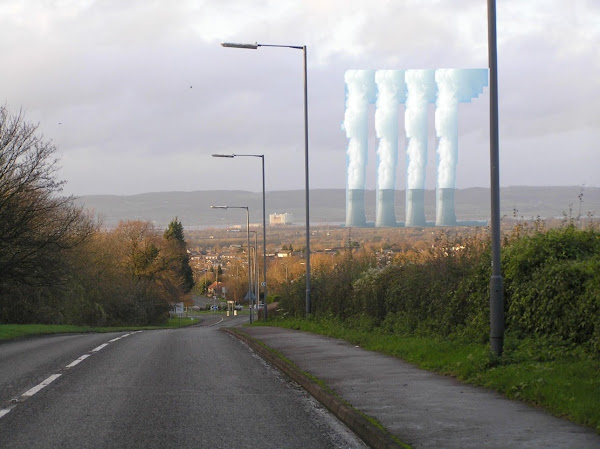
Since the Fukushima disaster in Japan, the Indian government has become concerned about the safety of the nuclear reactors that they were going to order from France. They have postponed their decision to buy the EPR reactors.
How come the British government is still backing EDF's plan to build this type of reactor at Hinkley?
Vaiju Naravane wrote in The Hindu, Paris, September 20, 2011
"India will postpone its final decision on the purchase of EPR type nuclear reactors from France until after the current post-Fukushima nuclear safety tests have been satisfactorily completed, it is reliably learnt.
Srikumar Banerjee, Chairman of India's Atomic Energy Commission, conveyed this message to French Industry Minister Eric Besson when the two met during the International Atomic Energy Agency (IAEA) consultations which opened in Vienna. Mr. Besson said: “Dr. Banerjee said India imports only reactors which have been certified by their own authorities. The EPR has already been certified. Now they want the post-Fukushima certification.” However, he added that the Indians had conveyed this message “in a very positive manner.”
Several nuclear contracts around the world have been either frozen, delayed or cancelled as a result of the March 2011 Fukushima nuclear disaster, the worst nuclear accident to hit the planet after the Chernobyl explosion of 1986, putting into doubt the much-vaunted “nuclear renaissance.” Germany has chosen to forgo the nuclear option altogether and in France there is talk of reducing the country's dependence on nuclear energy to 50 per cent from the current 75 per cent, by 2025.
The EPR plant under construction at Flamanville (northern France) has seen interminable delays and a massive cost hike. Two persons have died on the construction site and the plant is not expected to go on stream before 2016 at the very least. EDF, the most experienced constructor in the world, has admitted it has not mastered the engineering techniques demanded by the hugely complex and complicated design of the massive 1,650 MWe pressurised water reactor. There is not a single EPR plant operating to date and the Olkiluoto plant in Finland too has seen massive cost overruns and long delays, with the result that the Finns and Areva are locked in a protracted legal battle.
In December 2010 Areva signed a framework agreement with India to build the first of six EPR reactors at Jaitapur in Maharashtra with an option of four more reactors to follow. But Areva will build only the nuclear island while the turbine island and other installations will have to be built by contractors chosen by the NPCIL. Fears have been expressed that with EDF, the most experienced builder and operator of nuclear reactors in the world unable to get it right in Flamanville, the Indian side may not be able to ensure proper construction and safety. There is also some uncertainty about the central dome of the EPR which is forged by the Japanese. Japan, with its aggressive anti-nuclear stand (especially on proliferation issues) may not agree to the technology transfer to India.
On September 15, France's major nuclear operators including Areva and electricity giant EDF handed in their self-evaluation reports on 80 installations to the nuclear safety agency, the ASN. This body, along with the IRSN (Institute of Radio-protection and Nuclear Safety) will now examine the self-evaluations submitted by the three nuclear players in France and hand in its report by the end of 2011.
Already nuclear watchdog agencies such as Sortir du Nuclear (Quitting Nuclear), the Nuclear Observatory and several ecologist groups have criticised the method of self-evaluation adopted by the ASN and the French government.
“No credibility can be accorded to this type of self-evaluation by commercial enterprises. They have no desire whatsoever to see their operations halted for further verification,” said Stephane Lhomme, of the NGO Nuclear Observatory. “The only way to really verify all the safety factors and mechanisms is by halting the installations. This is not to speak of the totally unresolved questions of nuclear waste or the decommissioning of old reactors.”
“These tests are all fluff,” said nuclear scientist Jean-Marie Brom, who works at the Centre for Scientific Research in Strasbourg and is a member of Sortir du Nucleaire. “We are not in any way better prepared to prevent nuclear accidents. Had Tepco been asked to do a safety report on Fukushima a year ago, the company would have said it was perfectly safe.”
A recent blast at France's oldest nuclear site in Marcule which killed one person and injured four has reignited the debate on nuclear safety in France."
SOUTH ASIANS AGAINST NUKES (SAAN):
An informal information platform for activists and scholars concerned about the dangers of Nuclearisation in South Asia
http://s-asians-against-nukes.org/
How come the British government is still backing EDF's plan to build this type of reactor at Hinkley?
Vaiju Naravane wrote in The Hindu, Paris, September 20, 2011
"India will postpone its final decision on the purchase of EPR type nuclear reactors from France until after the current post-Fukushima nuclear safety tests have been satisfactorily completed, it is reliably learnt.
Srikumar Banerjee, Chairman of India's Atomic Energy Commission, conveyed this message to French Industry Minister Eric Besson when the two met during the International Atomic Energy Agency (IAEA) consultations which opened in Vienna. Mr. Besson said: “Dr. Banerjee said India imports only reactors which have been certified by their own authorities. The EPR has already been certified. Now they want the post-Fukushima certification.” However, he added that the Indians had conveyed this message “in a very positive manner.”
Several nuclear contracts around the world have been either frozen, delayed or cancelled as a result of the March 2011 Fukushima nuclear disaster, the worst nuclear accident to hit the planet after the Chernobyl explosion of 1986, putting into doubt the much-vaunted “nuclear renaissance.” Germany has chosen to forgo the nuclear option altogether and in France there is talk of reducing the country's dependence on nuclear energy to 50 per cent from the current 75 per cent, by 2025.
The EPR plant under construction at Flamanville (northern France) has seen interminable delays and a massive cost hike. Two persons have died on the construction site and the plant is not expected to go on stream before 2016 at the very least. EDF, the most experienced constructor in the world, has admitted it has not mastered the engineering techniques demanded by the hugely complex and complicated design of the massive 1,650 MWe pressurised water reactor. There is not a single EPR plant operating to date and the Olkiluoto plant in Finland too has seen massive cost overruns and long delays, with the result that the Finns and Areva are locked in a protracted legal battle.
In December 2010 Areva signed a framework agreement with India to build the first of six EPR reactors at Jaitapur in Maharashtra with an option of four more reactors to follow. But Areva will build only the nuclear island while the turbine island and other installations will have to be built by contractors chosen by the NPCIL. Fears have been expressed that with EDF, the most experienced builder and operator of nuclear reactors in the world unable to get it right in Flamanville, the Indian side may not be able to ensure proper construction and safety. There is also some uncertainty about the central dome of the EPR which is forged by the Japanese. Japan, with its aggressive anti-nuclear stand (especially on proliferation issues) may not agree to the technology transfer to India.
On September 15, France's major nuclear operators including Areva and electricity giant EDF handed in their self-evaluation reports on 80 installations to the nuclear safety agency, the ASN. This body, along with the IRSN (Institute of Radio-protection and Nuclear Safety) will now examine the self-evaluations submitted by the three nuclear players in France and hand in its report by the end of 2011.
Already nuclear watchdog agencies such as Sortir du Nuclear (Quitting Nuclear), the Nuclear Observatory and several ecologist groups have criticised the method of self-evaluation adopted by the ASN and the French government.
“No credibility can be accorded to this type of self-evaluation by commercial enterprises. They have no desire whatsoever to see their operations halted for further verification,” said Stephane Lhomme, of the NGO Nuclear Observatory. “The only way to really verify all the safety factors and mechanisms is by halting the installations. This is not to speak of the totally unresolved questions of nuclear waste or the decommissioning of old reactors.”
“These tests are all fluff,” said nuclear scientist Jean-Marie Brom, who works at the Centre for Scientific Research in Strasbourg and is a member of Sortir du Nucleaire. “We are not in any way better prepared to prevent nuclear accidents. Had Tepco been asked to do a safety report on Fukushima a year ago, the company would have said it was perfectly safe.”
A recent blast at France's oldest nuclear site in Marcule which killed one person and injured four has reignited the debate on nuclear safety in France."
SOUTH ASIANS AGAINST NUKES (SAAN):
An informal information platform for activists and scholars concerned about the dangers of Nuclearisation in South Asia
http://s-asians-against-nukes.org/


