Showing posts with label Sizewell; Chernobyl. Show all posts

Friday, 22 April 2011

Nuclear concerns after Japan earthquake


 By Deborah McGurran  Political editor, BBC East  16 April 2011

A major disaster at Sizewell could see radiation hitting a wide area of Suffolk, Norfolk and Essex.
New concerns over nuclear energy in the East of England have been raised in the wake of the disasters which struck the power stations in Japan.

The devastating earthquake struck Japan on 11 March.
It left the nuclear reactors at Fukushima with no electricity.
An hour later the tsunami wiped out the back-up diesel generators.
The cooling system failed which caused the first of several explosions and radiation leaks.
EDF Energy, the UK's largest nuclear operator, which runs Sizewell in Suffolk, is keen to show that it could not happen in England.

The back-up systems for the pressurised water reactor at Sizewell include four separate diesel generators, which would be used if the electricity failed.
There is a 10m (33ft) barrier for sea defences, with a 5m (16ft) metre barrier behind it.
If the sea could no longer be used for Sizewell's cooling system there are two huge "car radiators" to take the heat away.

The Japanese government has placed a 20km (12 mile)exclusion zone around Fukushima.“
There is a 30km (19 mile) stay-indoors zone around Fukushima but the United States exclusion zone is 80km (50 miles).

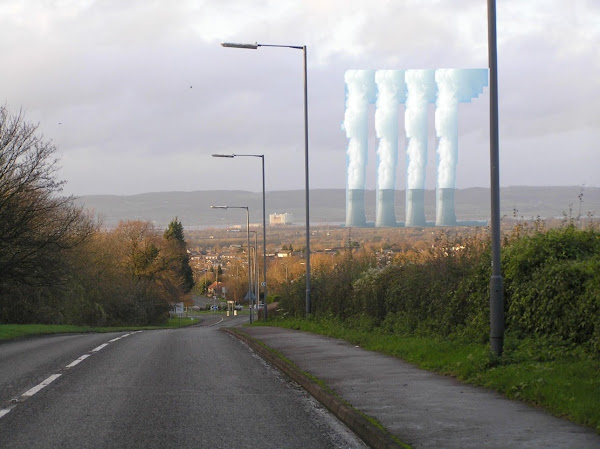
Stop Nuclear Power has superimposed these over East Anglia to show how far they would reach if there was a disaster here.  The American zone would extend from Cromer in Norfolk to beyond Colchester in Essex.

Mell Harrison, from Stop Nuclear Power UK, said she believed the back-up plans were not good enough.
This week she joined protests outside EDF's headquarters in London.

Protest camp
Next weekend she will be at a protest camp on the beach at Sizewell which will mark the 25th anniversary of Chernobyl.

She said: "When Fukushima first occurred people said there's no way it's going to be as bad as Chernobyl and now the level is the same.  "We're not going to know the full extent of it until the next generation and to me that's scary."

"Sizewell B, when they reopened after seven months, a little while later they closed down again for another few days.  "Now, we have the Freedom of Information on that accident and it says in there that it is still vulnerable.  "To me it says we need to shut them down and we need to shut them down as soon as possible."

Andy Spurr, one of the managing directors of EDF, said: "We will review our own operation but more importantly we'll review the lessons that came out of the Nuclear Installations Inspectorate's report as well and we may decide to put additional strength and depth in place.

"It's too early to talk about any of the details but I would describe it as, our minds are very open, in terms of looking and reviewing and learning."

The BBC Politics Show in the East is broadcast at 1400 GMT on Sunday

Friday, 7 May 2010

Chernobyl Day 26th Apr 2010

More than 50 protesters held a four-day camp on the beach near
Sizewell Nuclear Power Station to campaign against nuclear power on
the anniversary of the Chernobyl disaster. The camps included
workshops, a demonstration, a tour of the proposed site for the new
reactor and commemorations for Chernobyl Day.

http://www.chernobyl-day.org/spip.php?article920&lang=fr

Indymedia 30th Apr 2010

Tuesday, 27 April 2010

Sizewell Campers Mark Anniversary of Chernobyl Disaster

Monday, 26 April 2010

Around twenty activists from the Stop Nuclear Power Network [1] have held a ceremony on the beach in front of Sizewell nuclear power station in Suffolk (England) this afternoon to mark the 24th anniversary of the world's worst ever civil nuclear disaster, at Chernobyl (Ukraine). [2] They are looking to highlight the risk of a similar catastrophe happening in Suffolk, due to a reactor meltdown [3,4] or major radioactive waste incident.

A silent procession was led by people in white coats with their faces painted yellow and black with radiation symbols who banged a large “nuclear waste” drum and carried another containing pebbles of “radioactive waste”. The participants then formed a circle and individually deposited pebbles with messages and symbols into a pile to form a cairn in memory of the victims of Chernobyl and the nuclear industry. A banner was held that read “CHERNOBYL – 26 April 1986 – NEVER AGAIN”

A protest camp has been taking place on Sizewell beach since Friday as part of an international weekend of action to remember Chernobyl and oppose expansion of nuclear power. [5] On Saturday, a demonstration was held at the entrance to the power station. Over the weekend, campers have also hosted a public meeting in nearby Leiston, held information and campaigning skills workshops on the beach and toured the flood-prone site where EDF, the owners of British Energy, plan to build Sizewell C.

The UK government is pushing ahead with its plans for ten new nuclear power stations across the country, with Sizewell planned to host one of the first new reactors. This despite the fact even after 50 years, the nuclear industry has failed to come up with a permanent solution for its radioactive waste, which will remain dangerous for tens of thousands of years. [6] With current facilities at Sizewell B nearly full, plans are in place to build another temporary store where waste from the reactor would remain indefinitely in the absence of a permanent solution. This is before even considering the waste from any new reactor(s), which would be even more radioactive and too hot to transport for up to 160 years or longer.

Campaigner Mell Harrison from the Stop Nuclear Power Network, who lives in Beccles, Suffolk said: “We have left a cairn of stones on the beach to remember the many thousands of victims of Chernobyl and the nuclear industry. We hope this will remain as a permanent memorial and invite local people to add their own stones of remembrance. Marking this sad anniversary reminds us of the toxic legacy of our consumerist generation. With the nuclear industry unable to come up with a permanent solution to nuclear waste even after 50 years, we must stop producing any more waste and work within our communities to start living in more sustainable ways.”
http://stopnuclearpoweruk.net/

2. Total deaths and predicted deaths from the 1986 Chernobyl disaster range from 4000 to half a million. Doctors in the Ukraine and Belarus are seeing “highly unusual” rates of cancers, mutations and blood disease, which are thought to be linked to Chernobyl.

http://www.guardian.co.uk/environment/2010/jan/10/chernobyl-nuclear-deaths-cancers-dispute

3. EDF nuclear reactor carries 'Chernobyl-size' explosion risk - Guardian, 7 March 2010

http://www.guardian.co.uk/business/2010/mar/07/edf-nuclear-reactor-chernobyl-risk

4. Academics demand independent inquiry into new nuclear reactors – Guardian, 11 March 2010

http://www.guardian.co.uk/business/2010/mar/11/independent-inquiry-nuclear-power-stations

5. Chernobyl International Days of Action – 24-26 April 2010

http://www.blogger.com/goog_521885930

6. Nuclear Decommissioning Authority's Oxide Fuel Topic Strategy (2010) indicates that serious questions remain within the nuclear industry itself over whether any solution for permanent disposal of radioactive waste will ever be found.

http://www.nda.gov.uk/documents/upload/draft-oxide-fuel-topic-strategy-gate-zero.pdf