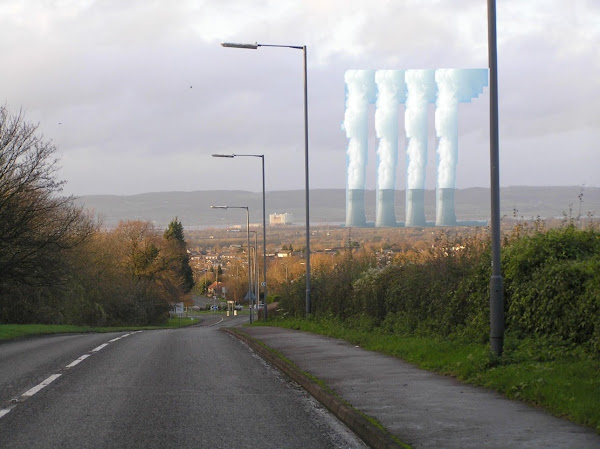
The Nuclear National Policy Statement explains how nuclear fits with energy policy and defines how the new fast-track planning system will process nuclear power station applications. Friends of the Earth has said it may challenge the nps consultation but it is still very worthwhile submitting as many responses as we can muster.
There is a simultaneous consultation over the "Justification" of new practices involving radiation. Under new EU law, the Government must justify any health detriment from running new nuclear power stations. This consultation has hardly been trumpeted by DECC but is potentially more of a show-stopper than the nps.
Both consultations end on 22nd February. The Hinkley C planning application to the Infrastructure Planning Commission is then expected in August, subject to both consultations being endorsed by DECC. Subject also to a safety licence being granted in June next year by the Nuclear Installations Inspectorate, EdF hope to begin building 'proper' later next year. They have already started investigative drilling etc and are putting in local planning applications for preliminary work.
EdF local consultation meetings have shown people are very distressed at the likely traumatisation of local villages due to the immense infrastucture of building two massive reactors. Two or possibly three reactors are slated for Oldbury with applications expected in October.
To take part in the Government consultations go to:
_www.energynpsconsultation.decc.gov.uk/home/_
(http://www.energynpsconsultation.decc.gov.uk/home/)
where you can fill in a response form and also order hard copies (1,600 pages!) of the consultation documents. Or call 0870 600 5533. Ask for all documents related to the nuclear policy statement and ‘justification’. Or simply send in your response by email to:
_energynpsconsultation@opm.co.uk_ (mailto:energynpsconsultation@opm.co.uk)
On the stop Hinkley website you will find two letters addressed to Government departments. You can use them to respond to the consultations. Simply add your name and address and post to the address at the top of the letters. Alternately you can adapt them with your own words.
_http://www.stophinkley.org/EngRevu/Template%20Justification%20response.doc_
(http://www.stophinkley.org/EngRevu/Template%20Justification%20response.doc)
_http://www.stophinkley.org/Temporary/OPMJan2010Template.doc_
(http://www.stophinkley.org/Temporary/OPMJan2010Template.doc)
Jim Duffy
Stop Hinkley Coordinator
Tuesday, 16 February 2010


Sunday, 14 February 2010
UK Signs nuclear deal with India
This week the UK signed a civil nuclear deal with India. This breaches the UK's
obligations under the Nuclear Non-Proliferation Treaty (NPT) not to provide nuclear
technology to non-signatory states. India possesses nuclear weapons but has not
signed the NPT and is not one of the declared Nuclear Weapons States under the
existing Treaty. Only this week, India again test-fired nuclear capable missiles and
is developing long-range nuclear capable missiles. The UK press and NGOs seem to
have maintained a wall of silence on this.
The press release below from the UK Department for Business
From the press release:
"The next steps include:
"- In early March the UK will host a major Nuclear New Build Conference, focusing on
new opportunities in India and the UAE. We have invited senior representatives from
the Nuclear Power Corporation of India Ltd (NPCIL) to set out India's plans for
developing nuclear power projects and technologies in the coming years. This event
will be attended by nuclear leaders from 15 nations and will provide a platform for
British Industry to forge new links and demonstrate their competitive edge.
"- In late March the UK will host a senior academic delegation from India who will
meet with their UK counterparts funded by a million pound grant of the Engineering
and Physical Sciences Research Council to encourage and nurture post doctoral
research in this field. This will be the initial meeting of a two-year project.
"- Many British companies involved in the UK Nuclear Supply Chain will travel as
part of a UKTI-led high level British delegation to India later this year."
obligations under the Nuclear Non-Proliferation Treaty (NPT) not to provide nuclear
technology to non-signatory states. India possesses nuclear weapons but has not
signed the NPT and is not one of the declared Nuclear Weapons States under the
existing Treaty. Only this week, India again test-fired nuclear capable missiles and
is developing long-range nuclear capable missiles. The UK press and NGOs seem to
have maintained a wall of silence on this.
The press release below from the UK Department for Business
From the press release:
"The next steps include:
"- In early March the UK will host a major Nuclear New Build Conference, focusing on
new opportunities in India and the UAE. We have invited senior representatives from
the Nuclear Power Corporation of India Ltd (NPCIL) to set out India's plans for
developing nuclear power projects and technologies in the coming years. This event
will be attended by nuclear leaders from 15 nations and will provide a platform for
British Industry to forge new links and demonstrate their competitive edge.
"- In late March the UK will host a senior academic delegation from India who will
meet with their UK counterparts funded by a million pound grant of the Engineering
and Physical Sciences Research Council to encourage and nurture post doctoral
research in this field. This will be the initial meeting of a two-year project.
"- Many British companies involved in the UK Nuclear Supply Chain will travel as
part of a UKTI-led high level British delegation to India later this year."
Sunday, 7 February 2010
Radiation Free Lakeland back jailed activist
Radiation Free Lakeland have sent a message of support to peace activist
Dan Viesnik at Pentonville Prison.
Viesnik has been imprisoned for 14 days for not paying a £500 fine after a
sit-down protest outside Aldermaston nuclear weapons factory.
He took part in the Footprints for Peace vigil at Sellafield in 2007
alongside Radiation Free Lakeland campaigners.
Viesnik had also helped coordinate several anti-nuclear power protests
including those at the Energy Select Committee last Wednesday, Buckingham
Palace in April and Australia House in November.
In his letter to Highbury Corner Magistrates Viesnik said he has decided
to continue his protest against the grotesque distortions of justice
caused by the British Government's commitment to Weapons of Mass
Destruction.
He continued his argument in the statement that he read out to the court
which protested against the resources spent on nukes in a world where
chronic poverty continued.
He ended his statement with a quote from Thoreau affirming that an
individual acting according to his/her own conscience should be a better
guide to conduct than the letter of law.
More Info:
_www.stophinkley.org_ (http://www.stophinkley.org)
http://stopnuclearpower.blogspot.com/
http://www.getnoticedonline.co.uk/news/general-news/radiation-free-lakeland-back-jailed-activisit.html
Dan Viesnik at Pentonville Prison.
Viesnik has been imprisoned for 14 days for not paying a £500 fine after a
sit-down protest outside Aldermaston nuclear weapons factory.
He took part in the Footprints for Peace vigil at Sellafield in 2007
alongside Radiation Free Lakeland campaigners.
Viesnik had also helped coordinate several anti-nuclear power protests
including those at the Energy Select Committee last Wednesday, Buckingham
Palace in April and Australia House in November.
In his letter to Highbury Corner Magistrates Viesnik said he has decided
to continue his protest against the grotesque distortions of justice
caused by the British Government's commitment to Weapons of Mass
Destruction.
He continued his argument in the statement that he read out to the court
which protested against the resources spent on nukes in a world where
chronic poverty continued.
He ended his statement with a quote from Thoreau affirming that an
individual acting according to his/her own conscience should be a better
guide to conduct than the letter of law.
More Info:
_www.stophinkley.org_ (http://www.stophinkley.org)
http://stopnuclearpower.blogspot.com/
http://www.getnoticedonline.co.uk/news/general-news/radiation-free-lakeland-back-jailed-activisit.html
Thursday, 4 February 2010
Oldbury campaigners were on the local radio, objecting to the proposed new nuclear power station at Oldbury
Oldbury nuclear station plan exhibition opens
BBC News online Thursday 4th Feb 2010
Plans for a new nuclear power station in south Gloucestershire have gone
on display.
The exhibition has opened at Turnberrie's Community Centre and there will
be a public discussion at Thornbury Leisure Centre on Saturday.
Campaigners opposed to the station have said they will stage a protest.
The three-day exhibition, organised by the Department of Energy and
Climate Change, ends on Saturday.
Oldbury is one of 10 potential sites for new nuclear stations listed by
the government in its draft Nuclear National Policy Statement, published on 9 November.
Energy and Climate Change Minister Lord Hunt said hosting a nuclear power
station would mean that Oldbury "would continue to play a big part in
helping the UK transform its energy sector".
The department is conducting a 15-week consultation.
However, Shepperdine Against Nuclear Energy said it would hold a silent
protest before Saturday's discussion, where government officials will be
present.
A spokesman for the group said its concerns included possible health risks and harm to the environment.
_http://news.bbc.co.uk/1/hi/england/bristol/8497504.stm_
(http://news.bbc.co.uk/1/hi/england/bristol/8497504.stm)
BBC News online Thursday 4th Feb 2010
Plans for a new nuclear power station in south Gloucestershire have gone
on display.
The exhibition has opened at Turnberrie's Community Centre and there will
be a public discussion at Thornbury Leisure Centre on Saturday.
Campaigners opposed to the station have said they will stage a protest.
The three-day exhibition, organised by the Department of Energy and
Climate Change, ends on Saturday.
Oldbury is one of 10 potential sites for new nuclear stations listed by
the government in its draft Nuclear National Policy Statement, published on 9 November.
Energy and Climate Change Minister Lord Hunt said hosting a nuclear power
station would mean that Oldbury "would continue to play a big part in
helping the UK transform its energy sector".
The department is conducting a 15-week consultation.
However, Shepperdine Against Nuclear Energy said it would hold a silent
protest before Saturday's discussion, where government officials will be
present.
A spokesman for the group said its concerns included possible health risks and harm to the environment.
_http://news.bbc.co.uk/1/hi/england/bristol/8497504.stm_
(http://news.bbc.co.uk/1/hi/england/bristol/8497504.stm)
Friday, 29 January 2010
Stop Nuclear Expansion at Oldbury
The government is considering building a new generation of nuclear stations with Hinkley Point a favourite site, despite all the indications that renewables can fill the energy gap.
Nuclear power is not cheap and it is not safe.
The Stop Hinkley campaign campaigned vigorously on the dangers connected with running Hinkley 'A' and as a consequence BNFL reluctantly shut it down permanently in 2000.
Hinkley 'B' managers have admitted there are several cracks in the graphite moderator bricks which make up its reactor core. These could delay or make impossible the insertion of control rods that shut down the reactor in an emergency. Moreover the cracks could create that emergency through localised overheating. Hinkley 'B' is due to close in 2011 but British Energy has amazingly indicated they would like to extend the life of the cracked, polluting reactor for another ten years.
Upstream, the ageing reactor at Oldbury, just eight miles from Bristol, is posing a risk to the region and has been implicated in a leukaemia cluster discovered at nearby Chepstow. Technical problems abound at the plant and include crumbling reactor cores (worst in the Magnox fleet), cracking pressure vessels and subsidence. Stop Hinkley worked with regional BBC and ITV documentaries in September 2005 to highlight the risk from this crumbling old reactor.
Nuclear power is not cheap and it is not safe.
The Stop Hinkley campaign campaigned vigorously on the dangers connected with running Hinkley 'A' and as a consequence BNFL reluctantly shut it down permanently in 2000.
Hinkley 'B' managers have admitted there are several cracks in the graphite moderator bricks which make up its reactor core. These could delay or make impossible the insertion of control rods that shut down the reactor in an emergency. Moreover the cracks could create that emergency through localised overheating. Hinkley 'B' is due to close in 2011 but British Energy has amazingly indicated they would like to extend the life of the cracked, polluting reactor for another ten years.
Upstream, the ageing reactor at Oldbury, just eight miles from Bristol, is posing a risk to the region and has been implicated in a leukaemia cluster discovered at nearby Chepstow. Technical problems abound at the plant and include crumbling reactor cores (worst in the Magnox fleet), cracking pressure vessels and subsidence. Stop Hinkley worked with regional BBC and ITV documentaries in September 2005 to highlight the risk from this crumbling old reactor.
Thursday, 28 January 2010
Wednesday, 27 January 2010 Anti-Nuclear Activists Disrupt Parliamentary Committee to Expose "Dumping" of Local Democracy
A Select Committee meeting in the House of Commons was disrupted this morning by a small group of anti-nuclear activists. The incident took place during a packed session of the Department of Energy and Climate Change Parliamentary Select Committee on the proposed nuclear and other energy National Policy Statements, as representatives from pro-nuclear energy giants EDF, E.ON and RWE npower and the Association of Electricity Producers gave evidence.
Around half an hour into proceedings, two of the activists rose from their seats, stepped into the centre of the room and unfurled a six-foot banner they had smuggled in that read: "Local Democracy Dumped!", featuring radiation symbols and images of pyramids of radioactive waste drums. Meanwhile, a third activist handed out detailed briefings to committee members and the energy industry representatives explaining why they believed nuclear power was an unacceptable and inappropriate technology for tackling climate change.
The three activists were swiftly dragged away by police officers and detained at another location within the Palace of Westminster, along with a fourth man who had been photographing the incident. The four were held for over two hours for alleged breaches of "House regulations," before being released without charge and informed they were banned from the Parliamentary estate for the remainder of the day, thus missing the afternoon session in which anti-nuclear groups were to present their evidence before the Select Committee. They also had two banners confiscated.
The protesters were seeking to highlight the lack of local democracy associated with the new fast-track planning process, introduced under the new Planning Act, which it is thought will be used to silence dissenting local voices on major infrastructure projects, from nuclear and coal-fired power stations and nuclear waste dumps through to airport runways and motorways. Major decisions on such projects will in future be made by an unelected body known as the Infrastructure Planning Commission. Environmental groups such as Friends of the Earth and Greenpeace have threatened to bring judicial reviews of the new planning laws.
Mell Harrison, 38, Eastern Region CND co-ordinator from Suffolk, recently acquitted following a 2008 blockade at Sizewell nuclear power station, said:
“This consultation is a scam. I have attended the public meetings and exhibitions, which pay lip service to our concerns but nothing more. The new fast track planning system takes the decisions out of the hands of local communities, burdening them with a legacy of radioactive waste and a history of lies. The local people will be able to decide what colour the power stations are painted and where to plant the trees but will have no input on the fate of at least a hundred years of waste sitting on their doorstep. The nuclear industry tells us the issue of waste is all sorted, which it is not.”
She added: “Nuclear power is not the answer to climate chaos, and the building of new nuclear power stations is a distraction from the real solutions."
Ian Mills, 44, a veteran anti-nuclear campaigner from Chippenham, Wiltshire added: “The 'CON' in consultation says it all! We are being conned into believing we need nuclear power and conned into believing this consultation is democratic. Day by day our democracy is disappearing, and this time it’s the turn of the local planning process.”
Today's protest follows another yesterday, during the morning rush hour, outside Charing Cross Hotel in central London, where the Nuclear New Build Conference was taking place.
Daniel Viesnik, 35, from London said: “There are many groups and individuals around the country who feel as strongly as we do.
He warned: "If the Government and the nuclear industry choose to push ahead with their undemocratic plans for unnecessary, uneconomic and unsafe nuclear reactors, they can expect the protests and actions to gather momentum.”
All images are Copyright (c) 2010 D. Viesnik but may be reproduced free of charge for non-commercial purposes if credited. For high resolution versions or commercial use, e-mail vd2012-npp [at] yahoo.co.uk
More images here
Footage of the two Parliamentary Select Committee evidence sessions of 27 January on the nuclear and other energy National Policy Statements proposals can be viewed here:
Morning session, with energy companies giving evidence: http://www.parliamentlive.tv/Main/Player.aspx?meetingId=5723
(Footage suspended just before banner unfurled at 26:19, resumes at 26:40.)
Afternoon session, with anti-nuclear campaigners giving evidence: http://www.parliamentlive.tv/Main/Player.aspx?meetingId=5730
Around half an hour into proceedings, two of the activists rose from their seats, stepped into the centre of the room and unfurled a six-foot banner they had smuggled in that read: "Local Democracy Dumped!", featuring radiation symbols and images of pyramids of radioactive waste drums. Meanwhile, a third activist handed out detailed briefings to committee members and the energy industry representatives explaining why they believed nuclear power was an unacceptable and inappropriate technology for tackling climate change.
The three activists were swiftly dragged away by police officers and detained at another location within the Palace of Westminster, along with a fourth man who had been photographing the incident. The four were held for over two hours for alleged breaches of "House regulations," before being released without charge and informed they were banned from the Parliamentary estate for the remainder of the day, thus missing the afternoon session in which anti-nuclear groups were to present their evidence before the Select Committee. They also had two banners confiscated.
The protesters were seeking to highlight the lack of local democracy associated with the new fast-track planning process, introduced under the new Planning Act, which it is thought will be used to silence dissenting local voices on major infrastructure projects, from nuclear and coal-fired power stations and nuclear waste dumps through to airport runways and motorways. Major decisions on such projects will in future be made by an unelected body known as the Infrastructure Planning Commission. Environmental groups such as Friends of the Earth and Greenpeace have threatened to bring judicial reviews of the new planning laws.
Mell Harrison, 38, Eastern Region CND co-ordinator from Suffolk, recently acquitted following a 2008 blockade at Sizewell nuclear power station, said:
“This consultation is a scam. I have attended the public meetings and exhibitions, which pay lip service to our concerns but nothing more. The new fast track planning system takes the decisions out of the hands of local communities, burdening them with a legacy of radioactive waste and a history of lies. The local people will be able to decide what colour the power stations are painted and where to plant the trees but will have no input on the fate of at least a hundred years of waste sitting on their doorstep. The nuclear industry tells us the issue of waste is all sorted, which it is not.”
She added: “Nuclear power is not the answer to climate chaos, and the building of new nuclear power stations is a distraction from the real solutions."
Ian Mills, 44, a veteran anti-nuclear campaigner from Chippenham, Wiltshire added: “The 'CON' in consultation says it all! We are being conned into believing we need nuclear power and conned into believing this consultation is democratic. Day by day our democracy is disappearing, and this time it’s the turn of the local planning process.”
Today's protest follows another yesterday, during the morning rush hour, outside Charing Cross Hotel in central London, where the Nuclear New Build Conference was taking place.
Daniel Viesnik, 35, from London said: “There are many groups and individuals around the country who feel as strongly as we do.
He warned: "If the Government and the nuclear industry choose to push ahead with their undemocratic plans for unnecessary, uneconomic and unsafe nuclear reactors, they can expect the protests and actions to gather momentum.”
All images are Copyright (c) 2010 D. Viesnik but may be reproduced free of charge for non-commercial purposes if credited. For high resolution versions or commercial use, e-mail vd2012-npp [at] yahoo.co.uk
More images here
Footage of the two Parliamentary Select Committee evidence sessions of 27 January on the nuclear and other energy National Policy Statements proposals can be viewed here:
Morning session, with energy companies giving evidence: http://www.parliamentlive.tv/Main/Player.aspx?meetingId=5723
(Footage suspended just before banner unfurled at 26:19, resumes at 26:40.)
Afternoon session, with anti-nuclear campaigners giving evidence: http://www.parliamentlive.tv/Main/Player.aspx?meetingId=5730
Write to Owen Jenkins objecting to nuclear new build
Owen Jenkins
Office for Nuclear Development
Department of Energy and Climate Change
Bay 128
1, Victoria Street
London SW1H 0ET
Response to ‘Justification’ Consultation
I write to say that I do not agree that the building of new nuclear power stations such as an EPR at Hinkley Point is justified under the terms of the European Union law regarding health detriments from new practices which emit radiation. There is much evidence to show that there are significant health effects from the operation of nuclear plants such as the examples outlined below.
“Leukaemia incidence in Somerset with particular reference to Hinkley Point” Dr Cameron Bowie, Somerset Health Authority 1983, ’85, ’88. The three reports studied leukaemia incidence in West Somerset, finding a 24 percent excess in those aged under 24 years, suggesting a link to Hinkley Point.
“Breast cancer mortality and proximity to Hinkley Point nuclear power station 1995-98” Dr (now Professor) Chris Busby Green Audit 2000. Found an 89 percent excess of breast cancer deaths on Burnham-on-Sea north over a four year period. Follow up studies confirmed the excess.
“Parents Concerned about Hinkley survey, 2002” doorstep survey by volunteers analysed by Dr Chris Busby. 100% response from 30% of Burnham north population between 1996 and 2001 showed: leukaemia incidence 2.7 times the England & Wales average; breast cancer 98% above average; kidney cancer 4 times average; cervix cancer 5.5 times average. A Government committee wrote off the study saying wrongly it was a 30% response of a 100% population and therefore unrepresentative.
“Leukaemia in young children living in the vicinity of German nuclear plants”, Kaatsch, 2008 International Journal of Cancer (KiKK report). A very large German Government study showed more than doubling of leukaemia in children living within 5 kilometres of nuclear power stations with an effect as far away as 50 kms. Created a public outcry and many pregnant women moved away from nuclear plants.
The difficulty with the conventional approach to radiation risk is that the model does not allow sufficiently for internalised radioactive particles. The International Commission on Radiological Protection who advise on this, base their predictions on Hiroshima survivors but a single blast of radiation should be treated differently from long term exposure to inhaled particles. So experts predict low, statistically insignificant health effects. When these turn out to be higher than expected in epidemiological studies, they wrongly say it cannot be connected to the radiation. This is an unscientific approach, based on expected outcomes not on real outcomes.
The Committee Examining Risks from Internal Emitters (CERRIE, 2004) http://www.cerrie.org/
reported that radioactive ‘dose’ is now irrelevant, so radioactive discharges in millisieverts will not accurately predict whether individuals will be harmed. They also recommended that regulators should recognise that children are particularly vulnerable.
Office for Nuclear Development
Department of Energy and Climate Change
Bay 128
1, Victoria Street
London SW1H 0ET
Response to ‘Justification’ Consultation
I write to say that I do not agree that the building of new nuclear power stations such as an EPR at Hinkley Point is justified under the terms of the European Union law regarding health detriments from new practices which emit radiation. There is much evidence to show that there are significant health effects from the operation of nuclear plants such as the examples outlined below.
“Leukaemia incidence in Somerset with particular reference to Hinkley Point” Dr Cameron Bowie, Somerset Health Authority 1983, ’85, ’88. The three reports studied leukaemia incidence in West Somerset, finding a 24 percent excess in those aged under 24 years, suggesting a link to Hinkley Point.
“Breast cancer mortality and proximity to Hinkley Point nuclear power station 1995-98” Dr (now Professor) Chris Busby Green Audit 2000. Found an 89 percent excess of breast cancer deaths on Burnham-on-Sea north over a four year period. Follow up studies confirmed the excess.
“Parents Concerned about Hinkley survey, 2002” doorstep survey by volunteers analysed by Dr Chris Busby. 100% response from 30% of Burnham north population between 1996 and 2001 showed: leukaemia incidence 2.7 times the England & Wales average; breast cancer 98% above average; kidney cancer 4 times average; cervix cancer 5.5 times average. A Government committee wrote off the study saying wrongly it was a 30% response of a 100% population and therefore unrepresentative.
“Leukaemia in young children living in the vicinity of German nuclear plants”, Kaatsch, 2008 International Journal of Cancer (KiKK report). A very large German Government study showed more than doubling of leukaemia in children living within 5 kilometres of nuclear power stations with an effect as far away as 50 kms. Created a public outcry and many pregnant women moved away from nuclear plants.
The difficulty with the conventional approach to radiation risk is that the model does not allow sufficiently for internalised radioactive particles. The International Commission on Radiological Protection who advise on this, base their predictions on Hiroshima survivors but a single blast of radiation should be treated differently from long term exposure to inhaled particles. So experts predict low, statistically insignificant health effects. When these turn out to be higher than expected in epidemiological studies, they wrongly say it cannot be connected to the radiation. This is an unscientific approach, based on expected outcomes not on real outcomes.
The Committee Examining Risks from Internal Emitters (CERRIE, 2004) http://www.cerrie.org/
reported that radioactive ‘dose’ is now irrelevant, so radioactive discharges in millisieverts will not accurately predict whether individuals will be harmed. They also recommended that regulators should recognise that children are particularly vulnerable.
Subscribe to:
Posts (Atom)