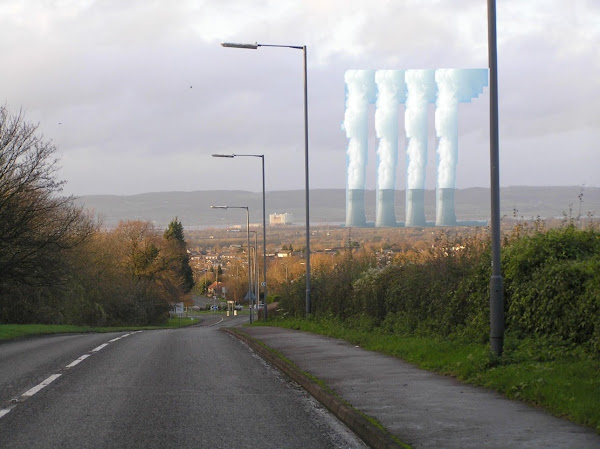
The catastrophe is still unfolding at Fukushima, but the British government is continuing with its plans for building new nuclear power stations – nuclear new-build. While other countries at least put a moratorium on new nuclear, or even make plans to phase out nuclear energy completely, in Britain it’s as if Fukushima didn’t happen. Like a mantra, government and the nuclear industry keep repeating that Fukushima could not happen in Britain because there are no earthquakes of that magnitude. We heard similar excuses after Chernobyl (1986) and Three Mile Island (1979). But nuclear accidents can and do happen – even in Britain; the disaster at Windscale in 1957 released massive levels of radiation into the atmosphere. If we continue to use and expand nuclear power, there will certainly be more catastrophic accidents, not to mention all the other enormous problems associated with nuclear power production, even when it is working ‘normally’.
Nuclear power is not necessary, not safe, not sustainable
Nuclear power is not necessary. Several studies, from the government's Sustainable Development Commission to Greenpeace and the Centre for Alternative Technology show that Britain can meet its energy needs without nuclear, and reduce carbon emissions at the same time.
Nuclear power is not sustainable. Nuclear power depends on uranium mining, which destroys huge landscapes and local communities living there. Uranium itself is a finite resource, and requires huge amounts of energy to be mined.
Nuclear power is not the answer to climate change. Nuclear power is not as low carbon as the government and the industry want us to believe. In addition, nuclear power is expensive, and takes a long time to build. In short: nuclear power provides too few carbon reductions, too late, and will divert investment from renewable, genuinely low-carbon forms of energy production.
Nuclear power is not safe. Accidents such as at Three Mile Island, Chernobyl, and Fukushima show the potentially catastrophic consequences of nuclear power. Numerous smaller accidents and incidents also happen at power stations in Britain: at Windscale, Bradwell, Sizewell, and others.
Nuclear power is a threat to our civil liberties. Because nuclear power stations are potential military or terrorist targets, they pose a threat to our civil liberties. The nuclear police have special powers, and everyone approaching a nuclear power station can be seen as a potential threat.
For more details, see our website at http://stopnewnuclear.org.uk/
We can stop new nuclear
The government and the nuclear industry want us to believe that nuclear new-build in Britain is a done deal. They want to discourage us from protesting – the message they want us to swallow is clear: opposition is futile, and we will be going ahead anyway!
However, that couldn't be further from the truth. Yes, the government has introduced a framework which effectively will subsidise new nuclear at our expense – as electricity consumers and taxpayers. Yes, the government has effectively deprived local communities from having a say in the planning process for new nuclear and other major infrastructure projects thus dumping a crucial cornerstone of local democracy.
But nuclear new-build in Britain is already behind schedule and has faced legal and other setbacks. Public concern is mounting following the Fukushima disaster. If we can stop the building at Hinkley, we can stop the whole process. Now is the time to mobilise and take action.
New-nuclear in Britain is far from being a done deal, and we can still stop it!
Nuclear power is not necessary, not safe, not sustainable
Nuclear power is not necessary. Several studies, from the government's Sustainable Development Commission to Greenpeace and the Centre for Alternative Technology show that Britain can meet its energy needs without nuclear, and reduce carbon emissions at the same time.
Nuclear power is not sustainable. Nuclear power depends on uranium mining, which destroys huge landscapes and local communities living there. Uranium itself is a finite resource, and requires huge amounts of energy to be mined.
Nuclear power is not the answer to climate change. Nuclear power is not as low carbon as the government and the industry want us to believe. In addition, nuclear power is expensive, and takes a long time to build. In short: nuclear power provides too few carbon reductions, too late, and will divert investment from renewable, genuinely low-carbon forms of energy production.
Nuclear power is not safe. Accidents such as at Three Mile Island, Chernobyl, and Fukushima show the potentially catastrophic consequences of nuclear power. Numerous smaller accidents and incidents also happen at power stations in Britain: at Windscale, Bradwell, Sizewell, and others.
Nuclear power is a threat to our civil liberties. Because nuclear power stations are potential military or terrorist targets, they pose a threat to our civil liberties. The nuclear police have special powers, and everyone approaching a nuclear power station can be seen as a potential threat.
For more details, see our website at http://stopnewnuclear.org.uk/
We can stop new nuclear
The government and the nuclear industry want us to believe that nuclear new-build in Britain is a done deal. They want to discourage us from protesting – the message they want us to swallow is clear: opposition is futile, and we will be going ahead anyway!
However, that couldn't be further from the truth. Yes, the government has introduced a framework which effectively will subsidise new nuclear at our expense – as electricity consumers and taxpayers. Yes, the government has effectively deprived local communities from having a say in the planning process for new nuclear and other major infrastructure projects thus dumping a crucial cornerstone of local democracy.
But nuclear new-build in Britain is already behind schedule and has faced legal and other setbacks. Public concern is mounting following the Fukushima disaster. If we can stop the building at Hinkley, we can stop the whole process. Now is the time to mobilise and take action.
New-nuclear in Britain is far from being a done deal, and we can still stop it!


