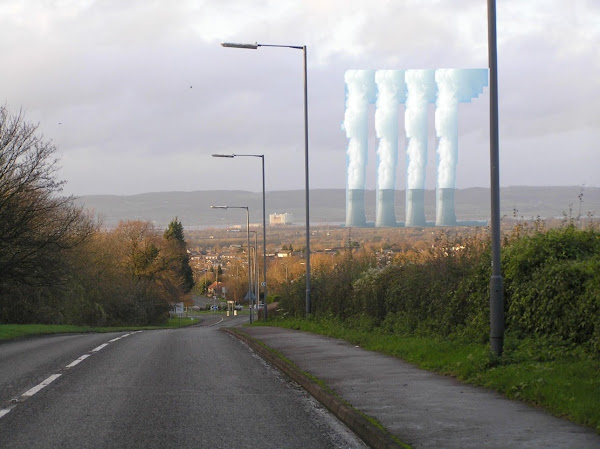
Thursday, 10 March 2011

Nuclear leaks and fires


And they say these nuclear power stations are safe!

Nuclear Installations: Accidents

Mr Weir: To ask the Secretary of State for Energy and Climate Change what (a) coolant leaks and (b) fires have been recorded at each UK nuclear installation in each of the last five years. [45017]
Charles Hendry: The Nuclear Installations Inspectorate of the Health and Safety Executive (HSE/NII) screens incident reports made by licensees to identify those which have had the potential to challenge a nuclear safety system. A search of the raw input data for such screening from January 2005 to the end of December 2010 has been undertaken for details of leaks and fires at nuclear installations.
A 'coolant leak' has been interpreted as being a loss of coolant, including clean coolant, from an item of plant into the working environment of the licensed site. Coolant itself has been interpreted as being water, carbon dioxide or hydrogen on a power station, and water elsewhere.
A 'fire' has been interpreted as being a situation where ignition of material has taken place on the licensed site or instances of smouldering where such ignition could not reasonably be ruled out given the information in the record.
Coolant leaks
DateInstallationIncident
2005
1 JanuaryHeysham 2Steam leak on Turbine Generator 7
5 FebruaryHinkley Point BCarbon dioxide leak from tank
19 FebruaryHinkley Point BCarbon dioxide leak from tank
25 FebruaryTornessCarbon dioxide leak through in-service inspection penetration
15 MarchTornessCarbon dioxide leak from ring main
25 JuneDungeness ACarbon dioxide leak from main CO2 plant
4 JulySellafieldDamp patch discovered adjacent to B30 pond wall
25 JulyOldburySteam leak through thermocouple pocket of Boiler 4 on Reactor 1
4 AugustHinkley Point BCarbon dioxide leak from vaporiser valve
30 OctoberDungeness ACarbon dioxide leak through failed isolation valve to pressure gauge
2006
30 JanuarySellafieldLeak of dosed cooling water from B832 cooling tower
18 FebruarySellafieldLeak of pond water through expansion joint above the stainless steel seal in B310 AGR storage pond
24 MarchHunterston BCarbon dioxide leak in pipe trench
11 SeptemberHinkley point BCarbon dioxide leak from supply pump

8 Mar 2011 : Column 975W
23 SeptemberHartlepoolAlternator hydrogen coolant leak
26 SeptemberHartlepoolFracture of emergency cooling water main
2 OctoberDungeness BAuxiliary cooling water pipe work leak
15 OctoberSizewell ASteam leak from Turbine Alternator 1
18 NovemberHeysham 2Steam leak from Reactor 7
2007
7 JanuarySizewell AFracture of pond recirculating water system pipe work
18 JanuarySellafieldWaste Vitrification Plant electrical inductor cooling water leak
1 MarchHinkley Point BCarbon dioxide leak outside plant room
26 MarchDungeness BCarbon dioxide leak in reactor basement
1 JuneHunterston BLeak from condensate booster pump
2 JuneHeysham 2Leak in low pressure feed heater pipe work
18 JulyDungeness BLeak of tritiated water identified
19 SeptemberHartlepoolLeak of pressure vessel cooling water identified on boiler closure unit
26 SeptemberDungeness BCarbon dioxide leak from storage tank
28 SeptemberHunterston BSteam leaks in high pressure gland pipe work
27 OctoberOldburyCarbon dioxide leak from fuelling machine
2008
19 FebruaryOldburyCarbon dioxide leak from storage tank
20 FebruaryTornessCarbon dioxide leak from gas bypass plant
26 JuneHeysham 2Steam leak in gland steam drain line
26 JulyHeysham 1Carbon dioxide leak from storage tank
7 OctoberWylfaCarbon dioxide leak from storage tank
23 DecemberTornessCarbon dioxide leak from valve in the fuel machine standby CO2 coolant supply.
2009
24 AprilHartlepoolHydrogen leak from Unit 2 alternator frame
26 MayHeysham 1Turbine cooling water leak
28 MayHinkley Point BPressure vessel cooling water leak from Reactor 4 sump
25 JuneHeysham 2Loss of Hydrogen from turbo alternator
8 JulyTornessLeak from spent fuel pond cooling water system
9 DecemberSellafieldFuel pond chiller water leakage
21 DecemberHeysham 1Back up cooling water leak soon after start up
2010
22 JanuarySellafieldLeakage of cooling water to active storage tanks
7 JuneDungeness BGland steam leak after start up
26 OctoberHeysham 1Small water leak from buffer store drain line
8 NovemberHeysham 1Emergency cooling water pipe failure and leak

Fire
DateSiteIncident
2005
4 FebruaryHeysham 1Smouldering lagging on turbine
8 MarchHeysham 2Fire on reactor basement sump pump
22 AprilHarwellCapacitor fire in building 459
22 JuneTornessVariable frequency output transformer fire
30 JuneBarrowPortacabin fire

8 Mar 2011 : Column 976W
14 JulyHeysham 2Fire in bearing of fuel handling plant extract fan
16 SeptemberTornessFire in purge air compressor no. 2
31 OctoberDungeness AFire in bulk group 4 LF power supply
2006
23 JanuarySellafieldSmoking bitumen seal around pipe on Combined Heat and Power Plant turbine
24 MarchDounreayHydrogen ignition during waste cutting operation in Prototype Fast Reactor
21 AprilSpringfieldsUranium shredder fire in building 338
23 OctoberHeysham 2Smouldering leak management tray beside hot turbine reheat pipe work
23 DecemberBurghfieldSmouldering cable in plant room
2007
1 FebruaryHinkley Point BFire in bund of gas circulator lube system
2 JuneHunterston BBearing fire on turbo generator 7
12 AugustHeysham 2Bearing fire in cooling water pump
2008
7 JanuaryDounreayFire in office suite of D1208
13 MarchGE HealthcareFire in inactive recycling plant
15 JuneRolls Royce ManufacturingFire in glove box
2 DecemberHartlepoolAerosol can fire
3 DecemberTrawsfynyddconvector heater fire in ponds office
2009
12 MarchHeysham 1Lagging smoke/fire
15 MarchGE HealthcareFire in services spine duct
31 MarchBarrowFire on the casing of Astute Boat 2 during welding/grinding operations
18 AprilBarrowFire on the bridge fin of Astute Boat I
29 AprilOldburySmoking air circuit breaker
18 MayWylfaFire in Turbine alternator
22 JulySellafieldExtract fan bearing fire
23NovemberDungeness BBoiler annex hydraulic fluid caught fire
2010
28 MayDounreaySmall in cell fire of sodium residues
2 JulySizewell BFire in ductwork in heating and ventilation building
4 JulyAldermastonSolvent fire minor bums to one person
2 AugustOldburyLagging fire near turbo alternator
22 SeptemberSizewell BCondensate pump fire
30 SeptemberWylfaSmouldering electrical contactor in Turbine Hall
25 OctoberHinkley Point BFire in circulator workshop
8 DecemberHeysham 2Bearing failure causing smoke in services building

Thursday, 17 February 2011

France: The latest "Discovery" of a disturbing "anomaly" in a series of 34 reactors


Press Release / Sortir du nucléaire / Our press release from 11/02/2011
The news remained discreetly buried in the depths of the site of the French Nuclear Safety Authority (ASN): Following recent studies, EDF has just "discovered" a disturbing "anomaly" standard on 34 of its reactors. In all reactors of 900 MW in case of major leakage from the  primary circuit, the water injection safety circuit  may be unable to prevent the meltdown of the reactor core.

The Nuclear Safety Authority (ASN) warns: "In an accident situation, for breach of certain sizes of primary pressure, the injection from the  high pressure safety system may not be sufficient enough to cool the reactor core" (i) ..
The water injection security system  is the only device that allows to delay a nuclear meltdown if there is a major leakage of primary circuit water. Its role is to inject massive quantities of boron water (ii) in this circuit to suppress the nuclear reaction and cool the core. 
So EDF has discovered this while the first series of 900 MW reactors have been running for over 30 years (iii), it is unable to assess whether the injected water through the system is uniformly distributed in the three loops of the primary circuit of the reactor; the ASN has admitted ,"it might not allow sufficient cooling of the reactor core" (iv).EDF has let 34 nuclear reactors run for a quarter of a century before to ensure the effectiveness of this primary prevention system against nuclear meltdown.
Why has this discovery occurred so late? It is extremely disturbing that a problem of this magnitude has been ignored for so long by EDF ...

The plants concerned are: Blaye (Gironde), Bugey (Ain), Chinon (Indre-et-Loire) Cruas (Ardèche), Dampierre (Loiret), Fessenheim (Haut-Rhin), Gravelines (Nord), Saint- Laurent des Eaux
(Loir-et-Cher), Tricastin (Drôme). Or all of the thirty four 900 MW nuclear reactors, some of which have already reached 30 years of operation.  EDF has put all its eggs in one basket, multiplying the risks as they go along....

Under the precautionary principle, the Network "Sortir du nucléaire" demands the closure of the reactors concerned. An accident caused by these "anomalies" would have catastrophic consequences. In a context where security concerns are increasing in recent years (v), this possibility must always be taken into account.  Especially considering that 21 reactors run on MOX fuel containing plutonium.

More than ever, the discovery of these failures shows vividly the need for a political energy transition  as quickly as possible, to finally get out of the French nuclear risk imposed on the population for decades.
In light of these security deficiencies, the Network "Sortir du nucléaire" has requested that the ASN plays its role, in requiring EDF, under the precautionary principle (vi), the closure without delay of the 34 reactors concerned.

NOTES:

i. Link to the opinion of the DSC security flaw:
omalie-generique-concernant-le-systeme-d-injection-de-securite
ii. The borated water serves to moderate the nuclear reaction in the core.
iii. The first reactor of 900 MW was connected to the grid in April 1977, the Central Fessenheim (Alsace). The last of the 34 900 MW reactor was connected to the power grid in November 1987 at the Central Chinon (Indre-et-Loire).
v. Report "The view of the IRSN on the safety and radiation protection of French nuclear power plants in 2009"
vi. The precautionary principle is constitutional since the integration of the Environmental Charter into the Constitution in 2005.

No Nuke Dump Under Forests at Whinlatter


Published: February 17, 2011 10:34 by marianne

This Saturday from 1-3pm  there is a Rally at Whinlatter to Save the Forest.  It's heartening that celebrities and NGOs have tripped over each other to line up to save the forests from  government sell off.
Hearbreaking that there are no national NGOs and No celebrities lining up to encourage people to save the forests from having a high level nuke dump under them.

Where are Melvyn Bragg, Eric Robson, Chris Bonnington when you need them!!!

The proposed forest sell off is an excellent way for people to quite rightly get all steamed up under a banner that people feel comfortable with, while meanwhile.....

.....Allerdale  Borough Council have "expressed an interest" in a high level waste nuke dump in their area  - this  includes the area of Whinlatter.

Research shows that leaking low level nuclear dumps lead to foliage above the ground transpiring radioactive carbon and tritium.  What is proposed is a high level dump (or two) and the lakes geology is wonderfully
leaky!!!

Campaigners working are all local volunteers - worryingly big NGO's have no concerted campaign on this.

We will be at Whinlatter with the NO NUKE DUMP petition - will have a banner and will be painting some red squirrels and have charcoals for people to do their own drawings.

ps:remember the Rusland Beeches campaign 15 years ago? No celebs lined to help - they were interested in helping ...-until being told that the trees were owned by the Lake District National Park with Friends of the Lake District, Cumbria Wildlife Trust and others all supporting the National Park proposal for clearfelling -  ........the trees are still standing!!
http://www.youtube.com/watch?v=XWeuirFumZs Links:

 NO CUMBRIA NUKE DUMP PETITION  Contact email: rafl@mariannebirkby.plus.com

Energy bills to rise as nuclear gets £3.43bn for doing nothing


Treasury fail to stop rising energy bills as WWF and Greenpeace call for windfall tax on nuclear generators
Energy bills will rise because Government proposals will handover £3.43bn to nuclear generators for doing absolutely nothing different. The proposals to introduce a carbon floor price as part of the ongoing Electricity Market Reform (EMR) consultation could end up benefiting existing nuclear generators to the tune of £3.43bn between 2013 and 2026.
The windfall follows years of financial subsidies for nuclear energy (including a £10bn public bailout of British Energy in 2002) and makes a mockery of the Coalition government’s stated opposition to any form of public subsidy for nuclear. 
WWF and Greenpeace are urging the government to introduce a windfall tax on existing nuclear generators alongside the carbon floor price mechanism, that would be used to support energy efficiency and emerging renewable technologies through the Green Investment Bank.
The carbon floor price will operate as a tax on power companies with coal and gas-fired plants. As coal and gas are the dominant forms of power generation in the UK, the carbon floor price will have the effect of increasing the wholesale electricity price as a consequence of increasing the costs incurred by coal and gas-fired power stations.
Because existing nuclear power stations do not burn fossil fuels, they will not have to account for the carbon floor tax but will benefit from increased electricity prices and therefore increased profits. WWF and Greenpeace have obtained the data on potential windfall profits from the modelling work used to underpin the Treasury's consultation on the carbon floor price.
A carbon floor price reaching £40t/CO2 in 2020 (one of 3 options put forward in the carbon price support consultation) could result in windfall profits of £3.43bn over the 2013-2026 period, and £3bn until 2022. This is based on the average number of hours that the UK’s existing nuclear power stations are expected to operate at for the remainder of their operational life.
WWF and Greenpeace are calling for a windfall tax to be introduced to claw back these additional revenues. They also are arguing for a significant proportion of the revenues to be used to help consumers reduce their overall energy consumption and R&D investment in emerging renewable technologies possibly by channelling these funds to properly capitalise the Green Investment Bank.
Commenting on the proposals, Nick Molho, Head of Energy Policy, WWF-UK, said:
“At a time of fiscal austerity and rising energy bills, it seems crazy to be introducing a policy that gives huge windfall profits to the existing nuclear generators - especially when this sector has been bailed out by the taxpayer on several occasions in the past. The Government should find ways to prevent these windfall profits, and use the revenue to help householders reduce their energy needs.”
Dr Douglas Parr, Chief Scientific Adviser and Policy Director, Greenpeace UK said:
“This is yet another taxpayer handout to a failing nuclear industry. The economics of nuclear power have never added up and it has been continually propped up with money from hard-working families.

“The continued kowtowing of the Government to the nuclear industry beggars belief. Government policy should be backing the building of globally competitive industries based on clean, cutting-edge forms of energy and green growth, not an outdated industry that has never been able to stand on its own two feet.”

- Ends -

Editor's notes
1.       On nuclear, the Coalition Agreement states: “Lib Dems have long opposed any new nuclear construction. Conservatives, by contrast, are committed to allowing the replacement of existing nuclear power stations provided that they are subject to the normal planning process for major projects and also provided that they receive no public subsidy. We will implement a process allowing the Lib Dems to maintain their opposition to nuclear power while permitting the Government to bring forward the NPS etc.” 

2.      Nuclear: A history of financial subsidies: The latest potential windfalls for existing nuclear generators are a reminder of how dependent this industry has always been on subsidies paid for by UK tax payers and electricity consumers. Billions of pounds of taxpayers money has already gone into supporting nuclear power. The idea that nuclear is a cheap energy source is wholly inaccurate.

·         In 1995 the Sizewell B nuclear power plant was completed at a cost to electricity consumers of more than £3bn, yet a year later when the newer nuclear plants were privatised as British Energy, it and seven other nuclear power plants of about the same size were sold for only about half this cost
·         In 2002, despite acquiring these eight plants for a fraction of their construction cost, British Energy went bankrupt and was saved only by the government committing £10bn of taxpayers’ money
·         The latest nuclear projects being built in Finland (currently 55% over budget and running 3 years late) and in France (€1bn over budget and running at least 2 years late) are the latest reminders that the costs of nuclear power stations remain extremely uncertain and very risky for consumers and tax payers.
3.      The Offshore Valuation Report recently prepared by government and major energy companies showed that by using just 29% of the UK’s offshore resource, the offshore renewables industry could allow the UK to become a next exporter of electricity by 2050, creating 145,000 jobs and £62bn of annual revenues in the process for the UK economy. This does not take into account other jobs that could be created through export opportunities.
4.      If everyone used natural resources and generated carbon emissions at the rate we do in the UK we would need three planets to support us. The way we live is leading to environmental threats such as climate change, species extinction, deforestation, water shortages and the collapse of fisheries. WWF’s One Planet Future Campaign is working to help people live a good quality of life within the earth’s capacity. For more information visit www.wwf.org.uk/oneplanet

For further information, please contact:

George Smeeton
WWF-UK tel: 01483 412 388, email: GSmeeton@wwf.org.uk

Graham Thompson
Greenpeace UK tel: 020 7865 8255, email: graham.thompson@greenpeace.org