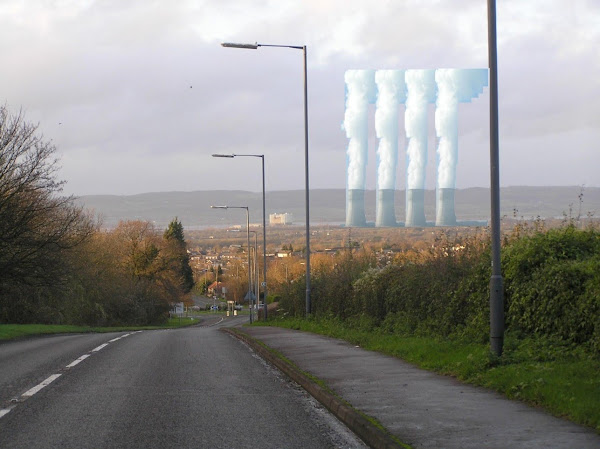
How cheap will it be to run nuclear plants as China and India begin a huge expansion of nuclear new build?
We are already seeing a huge rise in the price of uranium, before they even begin their building programme. But as "good" sources of uranium (i.e. 0.1%) run out and mining companies are forced to mine rock with a far lower yield, costs will spiral.
Angela
Mark Robinson in Investors Chronicle said on the 8th Dec
"Spot prices for uranium have recently bubbled up to around the $67 (£42.38) mark following confirmation that China's plans for its nuclear industry are far more ambitious than previously thought. At the recent International Nuclear Symposium held in Beijing, Chinese authorities announced that the People's Republic intended to construct up to 245 reactors over the next 20 years , at a projected cost of $511bn (£323bn).
China's ambitious urbanisation programme, coupled with unrelenting industrial demand, have placed great strain on its existing power infrastructure. Currently it is reliant on coal-fired power stations for 65 per cent of its energy needs, but as demand steadily rises, the country is facing the prospect of perpetual energy deficits unless alternate sources are brought on stream.
By 2020, it is estimated that China will require at least 35 per cent of the world’s current output of uranium ore, and that’s before the majority of the new reactors come on stream. Other countries, such as India, are also determined to expand nuclear capacity.
The recent hike in the spot price for uranium means it has now risen around 45 per cent since the start of this year. And come 2013, the supply of 'above-ground' uranium that has come from the gradual decommissioning of a vast arsenal of Sovier-era missiles will cease. That could throw the underlying supply-demand picture into sharp relief and have significant implications for the spot price."
Thursday, 9 December 2010


Monday, 6 December 2010
Why did the activists stop the nuclear waste train?
We find it absurd to transport 123 tons of highly radioactive waste across France and Germany to get them to a storage place that doesn’t offer any more guarantees compared to where the waste was stored in the first place. We understand the demand for return of the waste in their country of origin, from associations which fought from the beginning to prevent the arrival of these radioactive materials.
This transport of nuclear materials was also the most radioactive ever made: it contained twice the radioactivity released during the Chernobyl accident in 1986. Such convoys expose populations present along the path to excessive risks, both to their lives in the short-term but also long-term health … as is the case in Savoy with the transport of Italian waste two years ago. It was therefore logical to oppose this transport as well as all other trains with nuclear waste. It was also to express solidarity with the people of Germany who are not resigned to see their land contaminated forever.
Why stop the train?
This form of action is part of a movement of civil disobedience. This direct action was admittedly illegal from the standpoint of the law, but legitimate when compared to the danger and opacity of the nuclear industry.
It was also an act of solidarity and encouragement for antinuclear activists in Germany who were preparing to act in similar ways, a means to denounce the nuclear issue at the European level.
Radioactivity has no boundaries neither does our resistance!
This mode of action is of course not the only one but against the authoritarianism and the opacity of the nuclear industry it became necessary to choose this type of action. It definitely felt more of a necessity than a choice, which leads us to prefer a non-violent direct action to another mode of action.
A well planned action
Obviously, this was an action that was planned to be carried out safely.
Every precaution was taken not to put ourselves in danger with regards to the train. Thus, it is only when we saw that the train had stopped on the track (about a kilometre away) that the ten of us started the blockade. We very quickly set up under the rails, metal arm tubes on which five of us were locked on and we lit flares for the train driver to see us like we could see the lights on the train.
We then placed the banners indicating that the main message for our friends in Germany: "Our resistance knows no borders. Castor 2010, the first act. "
As with all such actions, the goal was not having to physically confront the police.
Without really believing it, we would have liked to maintain the presence of support for those doing physical lock-ons. This wasn’t possible.
The Law Enforcement
The police arrived within minutes by waves accompanied by a representative of the SNCF, then the mobile police and finally, the CRS (French riot police) who left the train while it was running slowly or close to us.
The police started removing the activists from the tracks that were not locked-on as well as journalists, and only then the CRS started to be interested in those who were locked on. They then put up blue tarpaulins to prevent people from seeing what was happening.
Freeing the blockaders
After they suddenly realised while trying to manually unlock the militants that it was not possible, the CRS quickly used a Circular saw with a big grinder engine, for cutting metal tubes one by one. It was quite impressive and we did not know how it was going to finish.
The CRS were very tense and wanted to extract us as soon as possible to allow the train to leave. This eagerness was detrimental to our security.
While we were locked-on under the tracks, it was their responsibility to free us without harming us.
From the beginning, the CRS were violent not only towards the blockaders but all other witnesses who were quickly told/forced to leave.
In addition to putting us under psychological pressure for more than two hours, police deliberately injured three of us when cutting the tubes.
Despite the howls of pain associated with burns, the CRS continued like nothing had happened… After a while they stopped for just a few seconds, before resuming with a vengeance, pouring just a little bottled water. It was only when firemen were present for the last person that water was used in sufficient quantity to cool the tubes.
We were all injured during the police operation, three seriously: two of us had third degree burns on the left hand. The other person had two severed tendons in his hand and had to undergo surgery the next day.
Afterwards
Firemen transported three of us to the hospital. Custody had been filed for two upon arrival at the University Hospital in Caen, (before being treated by doctors). The third was transferred to another hospital for surgery.
Those treated on the spot were then transferred to the police station and placed in holding cells like the four others arrested at the scene of the blockade. The next day we were released to be brought before the prosecutor and the judge.
The last, he was arrested and put into custody immediately when discharged from hospital on Sunday evening two days after the action to be brought before the prosecutor and the judge the following day.
The condition of the wounded remains unresolved; the recovery will be long and the burned people will have to have skin grafts.
Justice
We could feel pressure coming “from above” in the Caen Court. The bail conditions the prosecution asked for were € 5000 to be handed in court by each of the seven activists before Monday, 15th November in order to avoid custody until trial, 8th December 2010. In the end, €16 500 were required in total.
This bond seems somewhat absurd, the prosecution has admitted our desire for everyone to be present at trial, while the judicial review, especially with such a financial guarantee was intended precisely to ensure the presence of the accused at trial. This demonstrates a willingness to put pressure on us or to slow the preparation of our defence as we had to raise this huge sum to start with, while the court was convened in just a month.
We expected to find ourselves in court; it is also often the case in this kind of action but not in such conditions.
The police
It is scandalous that in a non-violent action, the police deliberately cause injury to activists. It is for this reason that we have already filed a complaint against persons unknown “for aggravated violence”. Similarly, we have started a procedure with the CNDS (the police of the police).
The will of the government and the nuclear lobby was passing the convoy at all costs. We could see they were willing to wound, to hurt, to use violence. Was this what they had to hide behind the tarpaulins stretched out around the blockade?
Our goal now is to make them seriously regret their behaviour.
This affinity group is informal and autonomous without any legal existence.
It brings together men and women who wish to object strongly to nuclear power (including for military use). We can use the broad spectrum of non-violent direct actions and disobedience if they are declared and don’t harm people.
We reject authoritarianism and violence from both the state and the nuclear industry, so we exclude these principles in our operations and our actions.
Our core values are non-violence, solidarity and collective self-organisation.
At the end of 2010, we feel that we must go further into details. We recognise the diversity of group members and therefore we are not trying to write an ideology that should guide us.
Also, many in the group also act differently or similarly.
Some political positions (especially to political parties):
We are moving, above all, the idea of taking concrete action, to try to regain the power to interfere with the system that has allowed to develop nuclear and allowing it to continue.
These tools are those of the non-violent direct action and civil disobedience.
Linked to this, we attach great importance to disseminate the culture of self-organisation. The output of nuclear power is not only a technical issue or ecological, it is above all a democratic issue. And democracy for us is not that which is called “representative”.
However we do not want to be giving lessons. We are not political or policy experts, but we feel that a conflictual situation is much needed. This conflict that sometimes we create, restart or show must be taken up by a lot more people, by other actions, by direct questioning and even court cases. If someone can help to change things in an institution that they belong to, why not? We are not campaigning for that but everyone with the tools they dispose of can help us with nuclear phase out and to change the repressive system that we are in.
http://ganva.blogspot.com/
This transport of nuclear materials was also the most radioactive ever made: it contained twice the radioactivity released during the Chernobyl accident in 1986. Such convoys expose populations present along the path to excessive risks, both to their lives in the short-term but also long-term health … as is the case in Savoy with the transport of Italian waste two years ago. It was therefore logical to oppose this transport as well as all other trains with nuclear waste. It was also to express solidarity with the people of Germany who are not resigned to see their land contaminated forever.
Why stop the train?
This form of action is part of a movement of civil disobedience. This direct action was admittedly illegal from the standpoint of the law, but legitimate when compared to the danger and opacity of the nuclear industry.
It was also an act of solidarity and encouragement for antinuclear activists in Germany who were preparing to act in similar ways, a means to denounce the nuclear issue at the European level.
Radioactivity has no boundaries neither does our resistance!
This mode of action is of course not the only one but against the authoritarianism and the opacity of the nuclear industry it became necessary to choose this type of action. It definitely felt more of a necessity than a choice, which leads us to prefer a non-violent direct action to another mode of action.
A well planned action
Obviously, this was an action that was planned to be carried out safely.
Every precaution was taken not to put ourselves in danger with regards to the train. Thus, it is only when we saw that the train had stopped on the track (about a kilometre away) that the ten of us started the blockade. We very quickly set up under the rails, metal arm tubes on which five of us were locked on and we lit flares for the train driver to see us like we could see the lights on the train.
We then placed the banners indicating that the main message for our friends in Germany: "Our resistance knows no borders. Castor 2010, the first act. "
As with all such actions, the goal was not having to physically confront the police.
Without really believing it, we would have liked to maintain the presence of support for those doing physical lock-ons. This wasn’t possible.
The Law Enforcement
The police arrived within minutes by waves accompanied by a representative of the SNCF, then the mobile police and finally, the CRS (French riot police) who left the train while it was running slowly or close to us.
The police started removing the activists from the tracks that were not locked-on as well as journalists, and only then the CRS started to be interested in those who were locked on. They then put up blue tarpaulins to prevent people from seeing what was happening.
Freeing the blockaders
After they suddenly realised while trying to manually unlock the militants that it was not possible, the CRS quickly used a Circular saw with a big grinder engine, for cutting metal tubes one by one. It was quite impressive and we did not know how it was going to finish.
The CRS were very tense and wanted to extract us as soon as possible to allow the train to leave. This eagerness was detrimental to our security.
While we were locked-on under the tracks, it was their responsibility to free us without harming us.
From the beginning, the CRS were violent not only towards the blockaders but all other witnesses who were quickly told/forced to leave.
In addition to putting us under psychological pressure for more than two hours, police deliberately injured three of us when cutting the tubes.
Despite the howls of pain associated with burns, the CRS continued like nothing had happened… After a while they stopped for just a few seconds, before resuming with a vengeance, pouring just a little bottled water. It was only when firemen were present for the last person that water was used in sufficient quantity to cool the tubes.
We were all injured during the police operation, three seriously: two of us had third degree burns on the left hand. The other person had two severed tendons in his hand and had to undergo surgery the next day.
Afterwards
Firemen transported three of us to the hospital. Custody had been filed for two upon arrival at the University Hospital in Caen, (before being treated by doctors). The third was transferred to another hospital for surgery.
Those treated on the spot were then transferred to the police station and placed in holding cells like the four others arrested at the scene of the blockade. The next day we were released to be brought before the prosecutor and the judge.
The last, he was arrested and put into custody immediately when discharged from hospital on Sunday evening two days after the action to be brought before the prosecutor and the judge the following day.
The condition of the wounded remains unresolved; the recovery will be long and the burned people will have to have skin grafts.
Justice
We could feel pressure coming “from above” in the Caen Court. The bail conditions the prosecution asked for were € 5000 to be handed in court by each of the seven activists before Monday, 15th November in order to avoid custody until trial, 8th December 2010. In the end, €16 500 were required in total.
This bond seems somewhat absurd, the prosecution has admitted our desire for everyone to be present at trial, while the judicial review, especially with such a financial guarantee was intended precisely to ensure the presence of the accused at trial. This demonstrates a willingness to put pressure on us or to slow the preparation of our defence as we had to raise this huge sum to start with, while the court was convened in just a month.
We expected to find ourselves in court; it is also often the case in this kind of action but not in such conditions.
The police
It is scandalous that in a non-violent action, the police deliberately cause injury to activists. It is for this reason that we have already filed a complaint against persons unknown “for aggravated violence”. Similarly, we have started a procedure with the CNDS (the police of the police).
The will of the government and the nuclear lobby was passing the convoy at all costs. We could see they were willing to wound, to hurt, to use violence. Was this what they had to hide behind the tarpaulins stretched out around the blockade?
Our goal now is to make them seriously regret their behaviour.
Political stand
Who are we? What we stand for?
A few years ago, people involved in the Non-violent antinuclear Action group (GANVA in French) considered it important to draft a charter to consolidate a little bit positions that were until then more or less made up as they went along.This affinity group is informal and autonomous without any legal existence.
It brings together men and women who wish to object strongly to nuclear power (including for military use). We can use the broad spectrum of non-violent direct actions and disobedience if they are declared and don’t harm people.
We reject authoritarianism and violence from both the state and the nuclear industry, so we exclude these principles in our operations and our actions.
Our core values are non-violence, solidarity and collective self-organisation.
At the end of 2010, we feel that we must go further into details. We recognise the diversity of group members and therefore we are not trying to write an ideology that should guide us.
Also, many in the group also act differently or similarly.
Some political positions (especially to political parties):
We are moving, above all, the idea of taking concrete action, to try to regain the power to interfere with the system that has allowed to develop nuclear and allowing it to continue.
These tools are those of the non-violent direct action and civil disobedience.
Linked to this, we attach great importance to disseminate the culture of self-organisation. The output of nuclear power is not only a technical issue or ecological, it is above all a democratic issue. And democracy for us is not that which is called “representative”.
However we do not want to be giving lessons. We are not political or policy experts, but we feel that a conflictual situation is much needed. This conflict that sometimes we create, restart or show must be taken up by a lot more people, by other actions, by direct questioning and even court cases. If someone can help to change things in an institution that they belong to, why not? We are not campaigning for that but everyone with the tools they dispose of can help us with nuclear phase out and to change the repressive system that we are in.
http://ganva.blogspot.com/
Anti nuclear activists on trial in Caen, Normandy the 8 Dec

| Come and support the activists who blockaded the CASTOR train in Caen, France. Their trial is next Wednesday 8 December. They'll be a film/debate the night before and a concert on the Wednesday night. Free accommodation can be provided, contact:ganva@riseup.net for more info or send me an email. The website (in French and German) apart from this leaflet: http://ganva.blogspot.com/ Please send around to everyone and anyone. Hope to see you at the trial! |
Saturday, 4 December 2010
Anti-nuclear campaigners brand Government energy view a 'fantasy'
PRESS RELEASE - 29 November 2010
Activists interrupt public meeting to read out ‘cautionary tale’
West country members of the Stop Nuclear Power Network, have slammed a government consultation on the future of the UK’s energy supply - held today (Monday) in Bristol - as ‘trying to sell a fantasy’. And activists attending the public meeting, held by the Department of Energy and Climate Change (DECC), interrupted this afternoon’s event to read out their own ‘cautionary tale’ - which outlines the nightmare future that could be created if a new generation of nuclear power stations is given the go-ahead.
Local activist, Nikki Clark, says preliminary statements on nuclear power published by the DECC prior to today’s meeting acknowledge the huge negative impact that nuclear new-build will have on communities, biodiversity and water resources. ‘Yet despite this, they are continuing to push their nuclear agenda - claiming that it’s in the public interest,’ she says.
In response, activists opposed to EDF’s bid to build two new reactors at Hinkley Point, Somerset, halted the meeting to read out their own ‘cautionary tale’. The story described the plight of a greedy king who buys a dragon that breathes endless supplies of fire from its mouth - but also creates a mountain of highly poisonous waste from its rear end.
‘We can't believe that a Government in the 21st century can get away with telling fairy stories about nuclear energy to the nation and dressing it up as fact,’ Nikki explained. ‘In response, we’ve created our own cautionary tale which clearly illustrates the fatal flaws in nuclear energy production. The problems associated with the long-term storage of radioactive waste remains unsolved and we feel outraged at the government’s blindness to this issue. The nuclear industry has already left us with a terrible legacy for future generations – and now the Government wants to compound the problem.'
Fellow campaigner, Zoe Smith, added: 'They're promoting nuclear power as a sustainable option and claiming that we can't meet our carbon reduction targets without it. Yet only three years ago the Sustainable Development Commission produced a report that reinforced the widely held position amongst academics and scientists that carbon reduction targets can be met without new nuclear build (2).'
Nikki Clark, who lives close to Hinkley Point, added: 'People need to be reminded that the nuclear industry is still as dangerous as it is ever was and that more reactors will just increase the possibility of more radioactive leaks or another Chernobyl-style disaster.'
ENDS
For further details contact Nancy Birch on: 07506-006597
1 - EN 6 draft statement on energy policy nuclear main report
2 - Sustainable Development Commission positon paper on the role of nuclear power in a low carbon economy
EDF “Jumping The Gun” with Hinkley Point destruction
French energy company EDF is “jumping the gun” by applying to destroy over 400 acres of Somerset countryside – even before it has permission to build on the site – according to the local campaign group Stop Hinkley.
EDF has just submitted an application to West Somerset Council for what it describes as “preliminary works” in advance of constructing Britain’s largest nuclear power station. In fact this involves completely razing the site near Hinkley Point, filling in a beautiful valley and even starting excavation of the power station foundations.
All this would be done before a formal proposal to build the plant itself has been delivered to the Infrastructure Planning Commission, which could then reject it.
The company has already evicted all badgers from the site by blocking off their setts, an action approved prematurely by Natural England, the wildlife conservation body.
“EDF have already shown that they have precious little regard for the countryside,” says Stop Hinkley spokesman Crispin Aubrey. “Now they are about to treat it with contempt by trashing over 400 acres of woodland, cornfields and coastline. This is jumping the gun on a massive scale.”
The “preliminary works” proposed by the multinational power company - on 430 acres of land stretching from the Severn Estuary to the village of Shurton – involve:
· Removal of the majority of trees and hedges
· Filling in a valley with excavated earth
· Closure of existing footpaths and bridlepaths, including the coast path
· Security fencing round the whole area
· Stripping topsoil and vegetation to make a terraced area for the proposed nuclear reactors
· New roads built across the site
· Underground streams re-routed
· The excavation of more than 3.2 million cubic metres of soil, sub-soil and rocks. This is more than was dug out to prepare the site for the 2012 London Olympic Games
· Noise from up to 12,000 vehicle movements per month
· Construction of new sea wall along the coast
· Construction of a jetty out into the sea
The company says it will restore the site to its original state if it fails to gain permission for the Hinkley C power station. “This would be impossible,” says Crispin Aubrey. “You can’t recreate a landscape that has taken generations to mature.”
Stop Hinkley is urging all those opposed to EDF’s actions to register their objection with West Somerset Council, which is planning to conduct a consultation process.
Wednesday, 1 December 2010
Protest over South Gloucestershire nuclear plant scheme

More than 30 people took part in the march and rally
A demonstration has been held against plans for a new nuclear power plant in South Gloucestershire.
Campaign group Shepperdine Against Nuclear Energy (Sane) said it was concerned about safety and damage to the environment. Horizon Nuclear Power said it was listening to concerns, but it was about "achieving an acceptable balance".
The company hopes to start work at the site, next to the existing reactor, by 2019.
More than 30 people took part in a march and rally in Thornbury on Saturday.
The current power station at Oldbury is due to close next year. Reg Illingworth, from Sane, said campaigners would fight the plans with "energy and passion".
He said: "It is a true David versus Goliath battle against two massive, avaricious German energy companies along with support from parts of DECC (Department of Energy and Climate Change) and the government."
Previously, the firm said it was working on flood protection solutions, cooling systems and transport options, which were concerns that had been raised by local residents.
Government consultation branded a con by campaigners
Government consultation branded a con by campaigners
Call to protest outside Bristol public meeting on Monday 29th November
West country members of the Stop Nuclear Power Network are urging people to join them in a protest at a Government public consultation meeting they brand as undemocratic, which will discuss the Government’s revised draft National Policy Statements on energy infrastructure (1) – they include the role of nuclear power in the UK’s future energy mix. The event is one of only three that will take place around the country.
"This so-called public meeting is highly undemocratic and has all the hallmarks of the secrecy (2) the nuclear industry is renowned for," said Nikki Clark, a campaigner who lives near Hinkley Point in north Somerset. "It has not been widely publicised and only 100 people have been allowed to attend."
The protest will take place this Monday (29th) outside the Armada House Conference and Events, Armada House, Telephone Avenue, Bristol at 1pm.
Local Stop Nuclear Power Network campaigners argue that the consultation does not acknowledge that nuclear power is dangerous, undemocratic and unaffordable.
"The high-level waste from nuclear power stations cannot be safely stored in the long term," said Nikki. "The Government has no clue how to deal with it - except for deep geological storage, a method that is deeply flawed, leaving the problem for future generations to deal with."
"Nuclear power originated as a way of producing material for atomic weapons and has never lost its link with the arms industry and war,” added Nikki. “Depleted uranium from the nuclear cycle is used in weapons that cause cancers and birth defects in places like Iraq and Bosnia."
Nikki said the Bristol meeting is being held during the daytime, making it difficult for working people to attend. Scheduled for two and a half hours, campaigners say the event will not allow enough time for attendees to question the extensive range of documents included in this consultation (a staggering 168 documents in total - of which 148 relate to the Government's plans for new nuclear.)
The campaigners say the true costs of producing energy from nuclear have never been honestly calculated and put before the public: for instance, they say the costs of decommissioning (at least £70bn for the existing reactors) are not included.
"This consultation exercise is a sham. The Government has no interest in what we have to say. It’s simply a box-ticking exercise so that it can avoid legal challenges in the future," said Nikki.
Susan Newland, another member of the Stop Nuclear Power Network, said, "We are going to be protesting about the Government’s proposal to build a new generation of nuclear power stations, starting with Hinkley Point."
"This proposal, if carried through, will pose a threat to our health and that of future generations. Nuclear power stations will poison the environment with radioactive waste and emissions. Even if the Government says it will not use public subsidies for the next generation of power plants, you can be sure the public will be paying for it one way or another."
Nikki added, "Caroline Lucas, our only Green MP, has slammed nuclear new build as unsafe and unnecessary.(4)( 5) We say it's a strategy the British people simply can't afford."
Government consultation branded a con by campaigners
Call to protest outside Bristol public meeting on Monday 29th November
West country members of the Stop Nuclear Power Network are urging people to join them in a protest at a Government public consultation meeting they brand as undemocratic, which will discuss the Government’s revised draft National Policy Statements on energy infrastructure (1) – they include the role of nuclear power in the UK’s future energy mix. The event is one of only three that will take place around the country.
"This so-called public meeting is highly undemocratic and has all the hallmarks of the secrecy (2) the nuclear industry is renowned for," said Nikki Clark, a campaigner who lives near Hinkley Point in north Somerset. "It has not been widely publicised and only 100 people have been allowed to attend."
The protest will take place this Monday (29th) outside the Armada House Conference and Events, Armada House, Telephone Avenue, Bristol at 1pm.
Local Stop Nuclear Power Network campaigners argue that the consultation does not acknowledge that nuclear power is dangerous, undemocratic and unaffordable.
"The high-level waste from nuclear power stations cannot be safely stored in the long term," said Nikki. "The Government has no clue how to deal with it - except for deep geological storage, a method that is deeply flawed, leaving the problem for future generations to deal with."
"Nuclear power originated as a way of producing material for atomic weapons and has never lost its link with the arms industry and war,” added Nikki. “Depleted uranium from the nuclear cycle is used in weapons that cause cancers and birth defects in places like Iraq and Bosnia."
Nikki said the Bristol meeting is being held during the daytime, making it difficult for working people to attend. Scheduled for two and a half hours, campaigners say the event will not allow enough time for attendees to question the extensive range of documents included in this consultation (a staggering 168 documents in total - of which 148 relate to the Government's plans for new nuclear.)
The campaigners say the true costs of producing energy from nuclear have never been honestly calculated and put before the public: for instance, they say the costs of decommissioning (at least £70bn for the existing reactors) are not included.
Susan Newland, another member of the Stop Nuclear Power Network, said, "We are going to be protesting about the Government’s proposal to build a new generation of nuclear power stations, starting with Hinkley Point."
"This proposal, if carried through, will pose a threat to our health and that of future generations. Nuclear power stations will poison the environment with radioactive waste and emissions. Even if the Government says it will not use public subsidies for the next generation of power plants, you can be sure the public will be paying for it one way or another."
Nikki added, "Caroline Lucas, our only Green MP, has slammed nuclear new build as unsafe and unnecessary.(4)( 5) We say it's a strategy the British people simply can't afford."
West country members of the Stop Nuclear Power Network are urging people to join them in a protest at a Government public consultation meeting they brand as undemocratic, which will discuss the Government’s revised draft National Policy Statements on energy infrastructure (1) – they include the role of nuclear power in the UK’s future energy mix. The event is one of only three that will take place around the country.
"This so-called public meeting is highly undemocratic and has all the hallmarks of the secrecy (2) the nuclear industry is renowned for," said Nikki Clark, a campaigner who lives near Hinkley Point in north Somerset. "It has not been widely publicised and only 100 people have been allowed to attend."
The protest will take place this Monday (29th) outside the Armada House Conference and Events, Armada House, Telephone Avenue, Bristol at 1pm.
Local Stop Nuclear Power Network campaigners argue that the consultation does not acknowledge that nuclear power is dangerous, undemocratic and unaffordable.
"The high-level waste from nuclear power stations cannot be safely stored in the long term," said Nikki. "The Government has no clue how to deal with it - except for deep geological storage, a method that is deeply flawed, leaving the problem for future generations to deal with."
"Nuclear power originated as a way of producing material for atomic weapons and has never lost its link with the arms industry and war,” added Nikki. “Depleted uranium from the nuclear cycle is used in weapons that cause cancers and birth defects in places like Iraq and Bosnia."
Nikki said the Bristol meeting is being held during the daytime, making it difficult for working people to attend. Scheduled for two and a half hours, campaigners say the event will not allow enough time for attendees to question the extensive range of documents included in this consultation (a staggering 168 documents in total - of which 148 relate to the Government's plans for new nuclear.)
The campaigners say the true costs of producing energy from nuclear have never been honestly calculated and put before the public: for instance, they say the costs of decommissioning (at least £70bn for the existing reactors) are not included.
Government consultation branded a con by campaigners
Call to protest outside Bristol public meeting on Monday 29th November
West country members of the Stop Nuclear Power Network are urging people to join them in a protest at a Government public consultation meeting they brand as undemocratic, which will discuss the Government’s revised draft National Policy Statements on energy infrastructure (1) – they include the role of nuclear power in the UK’s future energy mix. The event is one of only three that will take place around the country.
"This so-called public meeting is highly undemocratic and has all the hallmarks of the secrecy (2) the nuclear industry is renowned for," said Nikki Clark, a campaigner who lives near Hinkley Point in north Somerset. "It has not been widely publicised and only 100 people have been allowed to attend."
The protest will take place this Monday (29th) outside the Armada House Conference and Events, Armada House, Telephone Avenue, Bristol at 1pm.
Local Stop Nuclear Power Network campaigners argue that the consultation does not acknowledge that nuclear power is dangerous, undemocratic and unaffordable.
"The high-level waste from nuclear power stations cannot be safely stored in the long term," said Nikki. "The Government has no clue how to deal with it - except for deep geological storage, a method that is deeply flawed, leaving the problem for future generations to deal with."
"Nuclear power originated as a way of producing material for atomic weapons and has never lost its link with the arms industry and war,” added Nikki. “Depleted uranium from the nuclear cycle is used in weapons that cause cancers and birth defects in places like Iraq and Bosnia."
Nikki said the Bristol meeting is being held during the daytime, making it difficult for working people to attend. Scheduled for two and a half hours, campaigners say the event will not allow enough time for attendees to question the extensive range of documents included in this consultation (a staggering 168 documents in total - of which 148 relate to the Government's plans for new nuclear.)
The campaigners say the true costs of producing energy from nuclear have never been honestly calculated and put before the public: for instance, they say the costs of decommissioning (at least £70bn for the existing reactors) are not included.
"This consultation exercise is a sham. The Government has no interest in what we have to say. It’s simply a box-ticking exercise so that it can avoid legal challenges in the future," said Nikki.
Susan Newland, another member of the Stop Nuclear Power Network, said, "We are going to be protesting about the Government’s proposal to build a new generation of nuclear power stations, starting with Hinkley Point."
"This proposal, if carried through, will pose a threat to our health and that of future generations. Nuclear power stations will poison the environment with radioactive waste and emissions. Even if the Government says it will not use public subsidies for the next generation of power plants, you can be sure the public will be paying for it one way or another."
Nikki added, "Caroline Lucas, our only Green MP, has slammed nuclear new build as unsafe and unnecessary.(4)( 5) We say it's a strategy the British people simply can't afford."
"This consultation exercise is a sham. The Government has no interest in what we have to say. It’s simply a box-ticking exercise so that it can avoid legal challenges in the future," said Nikki.West country members of the Stop Nuclear Power Network are urging people to join them in a protest at a Government public consultation meeting they brand as undemocratic, which will discuss the Government’s revised draft National Policy Statements on energy infrastructure (1) – they include the role of nuclear power in the UK’s future energy mix. The event is one of only three that will take place around the country.
"This so-called public meeting is highly undemocratic and has all the hallmarks of the secrecy (2) the nuclear industry is renowned for," said Nikki Clark, a campaigner who lives near Hinkley Point in north Somerset. "It has not been widely publicised and only 100 people have been allowed to attend."
The protest will take place this Monday (29th) outside the Armada House Conference and Events, Armada House, Telephone Avenue, Bristol at 1pm.
Local Stop Nuclear Power Network campaigners argue that the consultation does not acknowledge that nuclear power is dangerous, undemocratic and unaffordable.
"The high-level waste from nuclear power stations cannot be safely stored in the long term," said Nikki. "The Government has no clue how to deal with it - except for deep geological storage, a method that is deeply flawed, leaving the problem for future generations to deal with."
"Nuclear power originated as a way of producing material for atomic weapons and has never lost its link with the arms industry and war,” added Nikki. “Depleted uranium from the nuclear cycle is used in weapons that cause cancers and birth defects in places like Iraq and Bosnia."
Nikki said the Bristol meeting is being held during the daytime, making it difficult for working people to attend. Scheduled for two and a half hours, campaigners say the event will not allow enough time for attendees to question the extensive range of documents included in this consultation (a staggering 168 documents in total - of which 148 relate to the Government's plans for new nuclear.)
The campaigners say the true costs of producing energy from nuclear have never been honestly calculated and put before the public: for instance, they say the costs of decommissioning (at least £70bn for the existing reactors) are not included.
"This consultation exercise is a sham. The Government has no interest in what we have to say. It’s simply a box-ticking exercise so that it can avoid legal challenges in the future," said Nikki.
Susan Newland, another member of the Stop Nuclear Power Network, said, "We are going to be protesting about the Government’s proposal to build a new generation of nuclear power stations, starting with Hinkley Point."
"This proposal, if carried through, will pose a threat to our health and that of future generations. Nuclear power stations will poison the environment with radioactive waste and emissions. Even if the Government says it will not use public subsidies for the next generation of power plants, you can be sure the public will be paying for it one way or another."
Nikki added, "Caroline Lucas, our only Green MP, has slammed nuclear new build as unsafe and unnecessary.(4)( 5) We say it's a strategy the British people simply can't afford."
Subscribe to:
Posts (Atom)
