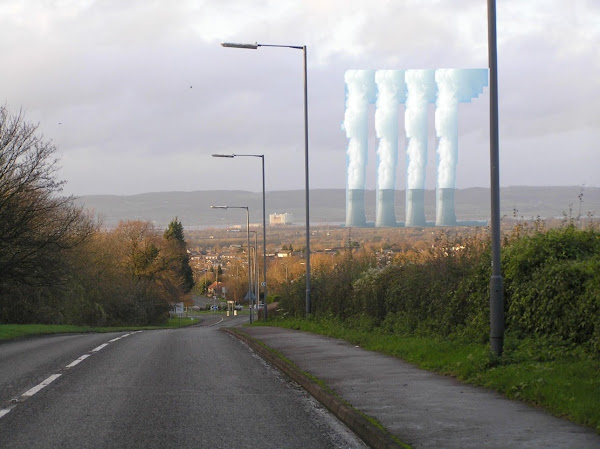
“We concentrated so much on nuclear that we lost sight of everything else … And nuclear has failed to deliver. It has turned out to be a costly gamble for Finland, and for the planet.” Oras Tynkynnen, a climate policy adviser, Finnish prime minister’s office. (1)
Introduction
Jurgen Trittin – Former German Federal Minister for the Environment – describes calls for more nuclear power to tackle the problem of climate change as “fighting one risk with an even bigger one”. (2) And Environment Ministers from Ireland, Norway, Iceland and Austria agree saying the current debate about the use of nuclear energy as a solution to climate change is downplaying the environmental, waste, proliferation, nuclear liability and safety issues. (3)
But, in fact the risk associated with building new reactors is much worse than simply increasing the risks associated with nuclear power. As The Independent highlighted in an editorial after the 2007 Energy White Paper, the danger is that nuclear investment will crowd out investment in renewables and undermine energy efficiency. (4) If we divert attention political effort and resources from the urgent programmes needed to effectively tackle climate change not only will we miss our targets, but as past experience suggests we could end up with carbon emissions still rising in 2025 because the nuclear programme has been hit by the problems and delays we have seen in the past and by then it will be too late to start implementing alternative strategies.
In February 2003 the Government itself had similar concerns. After the 2003 Energy White Paper (5) was published, Patricia Hewitt, the Secretary of State for Trade and Industry at the time, said:
“It would have been foolish to announce …a new generation of nuclear power stations, because that would have guaranteed we would not make the necessary investments in energy efficiency and renewables.” (6)
The White Paper promised a "step change" in policies and programmes to deliver energy efficiency.
(7) Six years later we are still waiting for that step change.
The trouble is that electricity only provides around 18% of UK energy demand. (8) Transport and most space heating are provided by other sources of energy. Nuclear power provides around 20% of UK electricity, which only amounts to about 8% of total energy. Allowing for losses at the power station, nuclear power’s current contribution to the UK’s final energy consumption is only 3.6 % (80 TWh/y out of a final consumption of about 2,250 TWh/y). (9)
So it is absolutely essential that we make sure building new reactors does not hinder efforts to reduce carbon emissions from the rest of the UK energy system providing the other 96% of final energy consumption.
The Domestic Sector
For example the domestic sector uses around 30% of the final energy consumed in the UK. If the UK Government is to meet its target to reduce carbon emissions by 80% by 2050, it will need to implement a set of policies which can cut emissions from the domestic sector by 80% by 2050. It should be doing this anyway to meet its legal obligations on fuel poverty. Every house will need excellent insulation and some form of Low and Zero Carbon Technology – microgeneration or community heating schemes. This means carrying out installations in all of the UK’s 25 million dwellings over the next 40 years or 625,000 dwellings every year between now and 2050. (10)
A long-awaited government consultation on energy efficiency published in February 2009 (11) – the Heat and Energy Saving Strategy (HESS) – sets out the need to reduce household carbon emissions to almost zero, in order for the UK to achieve its ambitious targets. It plans for reductions from households of a third by 2020, and by 2030 aims is for whole-house improvements to be available to every householder. Unfortunately, while the targets are ambitious, the document fails spell out a coherent strategy for achieving them. And much of what is planned won’t start until 2013. Friends of the Earth says targets won’t be achieved if we wait four years to begin. (12) It is difficult to avoid the conclusion the Government wants to get the nuclear programme started before it turns its attention to implementing a long overdue energy efficiency and microgeneration strategy. (13)
The contrast between the amount of Government effort, energy and funding which goes into promoting new nuclear reactors compared with energy efficiency and renewable energy is staggering. In June 2008, for example, the Government created the Office of Nuclear Development (OND), to build more effective cross-Government working on nuclear energy, and facilitate new nuclear investment in the UK. The OND has staff drawn from both the civil service and from industry, bringing together the relevant Government teams and resources to achieve its objectives. (14)
Opportunity Costs
Advocates of nuclear power argue that, because climate change is serious we need to promote renewables, energy efficiency and nuclear power. This suggests we have infinite sources of finance to spend on energy projects, which is obviously nonsense. A scarcity of resources means anything we spend on nuclear power will not be available to spend on other projects.
If nuclear power diverts attention and resources from renewables and energy efficiency you might think this wouldn’t be too serious for the climate, as long as we are reducing carbon emissions somehow. Unfortunately, nothing could be further from the truth, because nuclear power has such a high “opportunity cost”. The opportunity cost of any investment is the cost of forgoing the alternative outcomes that could have been purchased with the same money.
So, of course all investments will forego other opportunities. Tackling climate change is urgent, so we need to spend our limited resources as effectively as possible. In other words we need to maximize the carbon reductions we can achieve with every pound we spend. Investing in expensive nuclear power is just about the worst thing we can do. Energy efficiency can be up to seven times more cost effective. So investment in new reactors effectively worsens climate change because each pound spent is buying so much less ‘solution’ than if it were spent it on energy efficiency measures. (15)
Amory Lovins of the Rocky Mountain Institute says:-
"Each dollar invested in electric efficiency displaces nearly seven times as much carbon dioxide as a dollar invested in nuclear power, without any nasty side effects. If climate change is the problem, nuclear power isn't the solution. It's an expensive, one-size-fits-all technology that diverts money and time from cheaper, safer, more resilient alternatives." (16)
As a consequence investment in nuclear power will, in effect, worsen climate change because each pound spent is buying less solution than it would do if it were spent it on efficiency. (17)
Nuclear damages alternative carbon abatement techniques. OK, you might think, nuclear power might not be the most effective way to reduce carbon emissions, but as long as we spend enough we should still be able to tackle climate change.
Unfortunately, this also turns out to be wrong. Nuclear power’s contribution can only ever be really small, so we are going to have to develop energy efficiency and renewables, but we will be in real trouble if reactor construction programmes damage our efforts to develop alternative carbon abatement programmes. With nuclear power only providing around 4% of the UK’s final energy consumption, (18) we need to make absolutely sure that spending on building new reactors is not going to hinder our efforts to reduce carbon emissions from the rest of the UK energy system providing the other 96% of final energy consumption.
The UK Government’s Sustainable Development Commission (SDC), (19) Warwick Business School (WBS) (20) and the Environment Agency (21) have all warned that a decision to proceed with new reactors could seriously undermine the development of a low carbon energy system.
Warwick Business School (WBS) argues that, far from complementing the necessary shift to a low carbon economy, the scale of the financial and institutional arrangements needed for new nuclear stations means they would fatally undermine the implementation of low carbon technologies and measures such as demand management, and therefore will ultimately undermine the shift to a true low carbon economy. (22) Dr Catherine Mitchell (23) of WBS, who was a member of the previous Energy Review team, says the 2007 White Paper has nothing to do with placing the UK on a path for carbon reductions that might meet the challenge of climate change. It has sealed the fate of the UK in not being able to meet its future carbon dioxide reduction targets. Nor will UK businesses be able to benefit from the enormous opportunities a sustainable non-nuclear future offers. (24)
“Britain has visionary goals”, says Mitchell. We have made commitments to the European Union to provide 15% of our total energy from renewable sources by 2020, and to cut projected energy demand by 20%. “If the UK meets these legally binding targets, there is no need for new nuclear or coal plants. Why does government - ie Treasury - policy seem to concentrate on technologies we don't need?” (25)
The UK Government’s Sustainable Development Commission (SDC) points out that, even with a doubling of nuclear capacity from current levels, cuts of at least 50% would still be needed from other measures if the UK is to meet its climate targets for 2050. (26) So it is important that our capacity to implement other carbon abatement measures is not damaged by any decision to go ahead with the construction of new reactors. SDC says a new nuclear programme would give out the wrong signal to consumers and businesses, implying that a major technological fix is all that’s required, weakening the urgent action needed on energy efficiency. The Commission says a decision to proceed with a new reactor programme will require “a substantial slice of political leadership … political attention would shift, and in all likelihood undermine efforts to pursue a strategy based on energy efficiency, renewables and more CHP.” (27) Sir Jonathon Porritt, chair of the Commission, says nuclear power is already seriously diverting attention from the hard decisions required to solve the UK's energy challenges. (28)
Jeremy Leggett of Solar Century believes there has already been a deliberate focus on nuclear to the detriment of renewables. He was a member of the Renewables Advisory Board established in November 2002 to advise ministers on how to implement a plan, based on renewables and energy efficiency. By September 2003 the board’s industry members were already troubled by slow progress and issued a statement of concern. Leggett says he was warned that DTI officials would deliberately go slowly to keep hopes for nuclear alive and renewables would be teed up to fail. The slow-motion UK treatment of renewables since then, while renewables markets abroad have grown explosively, now makes it clear they were successful. (29)
In a memo to the House of Commons Trade and Industry Committee the Environment Agency expressed concern about the impact of investing billions of pounds in a new generation of reactors because it could siphon away resources from greener alternatives. Officials at the agency fear the energy review is biased towards the nuclear option. The Agency’s Energy Review submission says it is “…concerned about the displacement effect that a large programme of investment in one capital-intensive technology like nuclear may have on energy efficiency, CHP and renewable technologies ... There is a danger that an excessive focus on nuclear power and electricity supply will mean an insufficiently robust approach to all primary energy, including heat and transport”. (30)
And globally, decisions taken in the UK and the West can impact negatively on efforts to reduce carbon emissions around the globe. Vijay Vaitheeswaran, The Economist’s environment and energy correspondent (31), says:-
“Decisions taken in the next few years about energy in rich countries like Britain and the United States will shape investments made in energy infrastructure around the world for a generation or more. After all, nuclear and coal plants and oil refineries last for decades – and that sunk investment displaces or discourages nimbler, cleaner, and more distributed options like micropower. If we want to shift to a clean, secure, low-carbon energy system during this century, the time to start is now”. (32)
What if reactors fail?
If reactor construction fails to result in the replacement of existing capacity because of construction delays or public opposition, we could end up in a worse position than we are today. (33) Gordon MacKerron, former Chair of the Committee on Radioactive Waste Management (CoRWM), puts forward a worst-case scenario that following a commitment to nuclear new-build there is a sterilisation of non-nuclear investment and then the nuclear programme itself stalls. Such a scenario is far from a remote chance - the last time a UK government committed to 10 nuclear stations (Margaret Thatcher's in 1979) only one station was built, Sizewell, and then only after 15 years. If that were to happen again, carbon dioxide emissions would continue to increase. (34) Similarly, Bridget Woodman of Warwick Business School suggests a “nightmare scenario” in which a commitment to new reactors leads to a stalling of renewables and combined heat and power stations, but nuclear power fails too leading to an inevitable rise in carbon emissions. (35)
Another former CORWM member, Professor Andrew Blowers of the Open University, warns that nuclear power provides the illusion of a solution. He says: “It is this business-as-usual aspect of nuclear that is its most insidious characteristic. … The danger is that by focusing on nuclear we refrain from recognizing the scale of the challenge we face and shirk our responsibility for dealing with it”. (36)
So nuclear power is probably the most expensive way of reducing carbon emissions, but, because its contribution can only ever be small, we need other carbon abatement techniques if we are going to tackle climate change effectively. The trouble is, nuclear power could well damage our prospects of implementing those alternative carbon abatement techniques, and then, experience tells us there is a high risk that nuclear might not even be able to deliver the small contribution to reducing carbon emissions expected of it.
The Finnish experience
Very soon after the Finnish Parliament voted in 2002 to build a new reactor, Olkiluoto 3, according to Finland's former environment minister, Satu Hassi MEP, the country lost interest in alternative energy sources. (37) Measures promised in the climate report of 2001 were not implemented. Under the Kyoto Protocol, Finland agreed to keep its greenhouse gas emissions at 1990 levels during the target period 2008-2012. After falling in 2001 and 2002, Finland’s carbon emissions have been rising. Emissions were around 9% above 1990 levels in 2002.
Measures will have to be implemented to address this issue given that business-as-usual projections by the government indicate further increases in greenhouse gases, reaching 15% above 1990 levels during the first target window. Now many people – industry and trade union leaders - who had argued that because of Finland’s Climate Change commitments a new nuclear power station was necessary, have been saying that the commitments Finland had signed up to at Kyoto were a big mistake, unfair to Finland, far too costly and, in practice, impossible to achieve. (38)
The International Energy Agency has highlighted the risk to Finland of relying on the new reactor to meet its climate commitments in case the operation of the plant is in any way delayed. (39) In fact construction of Olkiluoto 3 is now three years behind schedule and 50% over budget. (40) Its original target date for completion was 2009, so there is a danger that it will not be available in time to contribute to meeting Finland’s target.
A Finnish Government climate policy advisor now admits that Finland has “concentrated so much on nuclear [that it has] lost sight of everything else.”(41) It is beginning to look like we may be heading for exactly the same problem here in the UK.
Pete Roche, June 2009
References
(1) Blake, M. Bad Reactors: Rethinking your opposition to nuclear power? Rethink again. Washington Monthly Jan/Feb 2009
http://www.washingtonmonthly.com/features/2009/0901.blake.html
(2) Frank Barnaby and James Kemp (Eds), Secure Energy? Civil Nuclear Power, Security and Global Warming, Oxford Research Group, March 2007.
http://www.oxfordresearchgroup.org.uk/publications/briefing_papers/pdf/secureenergy.pdf
(3) Liam Reid, “Ireland Joins Campaign Against Use of Nuclear Energy”, Irish Times, March 27, 2007.
See also: IOL, March 26, 2007
http://www.iol.co.za/index.php?set_id=1&click_id=31&art_id=nw20070326224024783C351478
(4) Leading Article: There is still time to avoid this nuclear folly. Independent 24th May 2007
http://comment.independent.co.uk/leading_articles/article2578450.ece
(5) Energy White Paper: Our Energy Future – Creating a low carbon economy. DTI. February 2003
http://www.berr.gov.uk/files/file10719.pdf
(6) Hansard; 24 February 2003 : Column 32
(7) Warren, A. Energy Efficiency Step Change? More like a soft shoe shuffle. Daily Telegraph 5th February 2008.
http://www.telegraph.co.uk/earth/earthcomment/3324265/Energy-efficiency-stepchange-More-like-a-soft-shoe-shuffle.html
See also “Why has Labour broken its promise not to build new nuclear power stations” by Andrew Warren, February 2008
http://www.ukace.org/index.php?option=com_content&task=view&id=404&Itemid=45
(8) Hansard 31st March 2009 Column 1168
http://www.publications.parliament.uk/pa/cm200809/cmhansrd/cm090331/text/90331w0032.htm
(9) Adam, D. Nuclear power cannot tackle climate change, Guardian 17th January 2006
http://www.guardian.co.uk/science/story/0,,1688034,00.html
(10) Boardman, B. Home Truths: A Low Carbon Strategy to Reduce UK Housing Emissions by 80% by 2050, FoE (EWNI) and Co-operative Bank, November 2007.
http://www.foe.co.uk/resource/reports/home_truths.pdf
(11) Be part of the great British refurb - to cut emissions and cut energy costs - Ed Miliband, DECC Press Release, February 12, 2009
http://nds.coi.gov.uk/environment/fullDetail.asp?ReleaseID=392487&NewsAreaID=2
(12) Friends of the Earth Press Release, February 12, 2009.
http://www.foe.co.uk/resource/press_releases/green_homes_12022009.html
(13) For a longer discussion see Great British Refurbishment, NuClear News No.4 March 2009.
http://www.no2nuclearpower.org.uk/nuclearnews/NuClearNewsNo4.pdf
(14) BERR Press Release 12th June 2008
http://nds.coi.gov.uk/environment/fullDetail.asp?ReleaseID=370431&NewsAreaID=2
(15) Lovins, A. More Profit with Less Carbon, Scientific American, September 2005
http://www.sciam.com/media/pdf/Lovinsforweb.pdf
(16) Vidal, J. Nuclear Plants Bloom, Guardian 12th August 2004,
http://www.guardian.co.uk/life/feature/story/0,,1280884,00.html
See also: Lovins, A. Why Nuclear Power’s Failure in the Marketplace is Irreversible (Fortunately for Nonproliferation and Climate Protection), Transcription of a presentation to the Nuclear Control Institute’s 20th Anniversary Conference, “Nuclear Power and the Spread of Nuclear Weapons: Can We Have One Without the Other?,” Washington, DC, April 9, 2001.
http://www.nci.org/conf/lovins/lovins-transcript.htm
(17) Lovins, A.Wise up to nuclear folly, Green Future Magazine, March/April 2006
http://www.forumforthefuture.org/greenfutures/articles/602479
(18) Adam, D. Nuclear power cannot tackle climate change. Guardian 17th January 2006
http://www.guardian.co.uk/science/story/0,,1688034,00.html
(19) The role of nuclear power in a low carbon economy, UK Sustainable Development Commission, March 2006.
http://www.sd-commission.org.uk/publications/downloads/SDC-NuclearPosition-2006.pdf
(20) Mitchell, C and Woodman, B. New Nuclear Power: Implications For A Sustainable Energy System, Warwick Business School for Green Alliance, April 2005.
http://www.green-alliance.org.uk/uploadedFiles/Publications/NewNuclearPower.pdf
(21) Woolf, M. Don’t rush to nuclear power warns Blair’s environment adviser. Independent on Sunday, May 21, 2006.
http://news.independent.co.uk/uk/politics/article549529.ece
(22) Mitchell, C and Woodman, B. New Nuclear Power: Implications For A Sustainable Energy System, Warwick Business School for Green Alliance, April 2005.
http://www.green-alliance.org.uk/uploadedFiles/Publications/NewNuclearPower.pdf
(23) Catherine Mitchell is now Professor of Energy Policy at Exeter University.
(24) Letter from Dr Catherine Mitchell, FT 30th May 2007
http://www.ft.com/cms/s/4015eb46-0e4b-11dc-8219-000b5df10621.html
(25) Mitchell, C. These Fossil Fools, Guardian 27th February 2009.
http://www.guardian.co.uk/commentisfree/2009/feb/27/mitchell-fossil-fuels-labour-carbon
(26) The role of nuclear power in a low carbon economy, UK Sustainable Development Commission, March 2006.
http://www.sd-commission.org.uk/publications/downloads/SDC-NuclearPosition-2006.pdf
(27) Is nuclear the answer? Sustainable Development Commission, March 2006
http://www.sd-commission.org.uk/publications/downloads/IsNuclearTheAnswer.pdf
(28) Porritt, J. Nuclear is the soft solution to tackling climate change. Guardian 5th July 2006
http://society.guardian.co.uk/societyguardian/story/0,,1812324,00.html
(29) Leggett, J. Yes Minister, Nuclear’s best. Guardian, January 3, 2008.
http://www.guardian.co.uk/commentisfree/2008/jan/03/politics.greenpolitics
(30) Environment Agency, Response to the DTI Consultation: The Energy Review, 2006.
(31) See http://www.economist.com/mediadirectory/listing.cfm?journalistID=30
(32) Vaitheeswaren, V. Power to the People, Earthscan, 2005.
http://www.vijaytothepeople.com/
(33) For a historical look at the disastrous record of the UK nuclear industry see: Olaf Bayer and Chris Grimshaw, Broken Promises: Why the nuclear industry won’t deliver, Corporate Watch, July 2007
http://www.corporatewatch.org.uk/?lid=2968
(34) MacKerron, G. Who Puts Up The Cash?, Observer, December 4, 2005.
http://observer.guardian.co.uk/business/story/0,,1657015,00.html
(35) Nuclear power: unnecessary, dangerous and expensive. Conference held at Portcullis House, Westminster, on 28th November 2006.
http://www.nuclearpowernothanks.co.uk/unnecessary_dangerous_expensive.pdf
(36) David Elliott (Ed), Nuclear or Not?Does Nuclear Power Have A Place in a Sustainable Energy Future? Palgrave, 2007
http://www.no2nuclearpower.org.uk/reviews/review02.php
(37) Harding, L. Caught between global warming and an energy crisis: Blair looks north for answers. Guardian 14th April 2006
http://politics.guardian.co.uk/green/story/0,,1753914,00.html
(38) Satu Hassi MEP, Finnish Environment Minister 1999 – 2002, Deciding on Nuclear, UK Parliamentary and Sustainable Energy Group (PRASEG) briefing November 2005,
http://www.satuhassi.net/puheet/praseg.pdf
See also “Finland: How Kyoto was used as an argument and what happened afterwards” October 18th 2005, Satu Hassi MEP,
http://www.satuhassi.net/puheet/kyoto181005.htm
and “Nuclear decision: myth and reality” speech by Satu Hassi MEP, 24th April 2006, Kiev.
http://www.satuhassi.net/puheet/kiev240406.htm
(39) International Energy Agency (2004), Energy Policies of IEA Countries; Finland 2003 Review.
http://www.iea.org/textbase/nppdf/free/2000/finland2003.pdf
(40) Gow, D. New-generation Finnish nuclear reactor hit by fourth delay. Guardian October 18, 2008
http://www.guardian.co.uk/environment/2008/oct/18/nuclearpower
(41) Blake, M. Bad Reactors: Rethinking your opposition to nuclear power? Rethink again. Washington Monthly Jan/Feb 2009
http://www.washingtonmonthly.com/features/2009/0901.blake.html
Friday, 16 July 2010


Tuesday, 13 July 2010
Afghanistan; Bala Murghab, raid all'uranio
Afghanistan; Bala Burghab, depleted uranium bombing
di Gianluca Di Feo (12 luglio 2010)
Nella zona dove operano gli alpini italiani, il 2 e il 3 luglio scorsi l'aeronautica americana ha scatenato gli Avenger, che sparano proiettili a uranio impoverito. Silenzio completo sulla vicenda da parte del nostro comando
In the area where the Italian Alpine unit operates, on the 2 and 3 July the US airforce sent the Avengers to fire depleted uranium bombs. Complete silence on the part of our command concerning this.
L'inizio di luglio è stato particolarmente caldo per gli alpini impegnati in Afghanistan. Ancora una volta la battaglia è divampata intorno alla base di Bala Murghab, la fortezza da cui la Nato controlla la frontiera con il Turkmenistan, strategica per il traffico di oppio e i rifornimenti dei talebani.
At the beginning of July it was very hot for the alpine unit in Afghanistan. Once again the battle raged around the base of Bala Murghab, the fortress from which Nato controlls the border with Turkmenistan, a strategic point where opium traffic and taleban supplies pass through.
E ancora una volta gli scontri sono rimasti nel silenzio: nei comunicati dello Stato maggiore Difesa non c'è traccia. Invece i bollettini statunitensi permettono di capire l'intensità dei combattimenti, fornendo un bilancio sintetico dei bombardamenti.
Once again there was no media coverage of the fighting in Italy: it was not reported in the Italian army communique at all. The US on the other hand reported the intensity of the fighting, and the number of bombings that were carried out.
Negli ultimi mesi il Pentagono aveva ridotto al massimo i raid aerei per evitare di colpire la popolazione civile: ci sono intere giornate in cui gli stormi alleati non sganciano nemmeno una bomba. Invece il 2 e il 3 luglio nel distretto affidato al comando italiano c'è stato fuoco a volontà.
Over the last few months the Pentagon has reduced the number of air raids in order to prevent uneccessary civilian deaths. There have been whole days when the US hasn't dropped a single bomb. But on the 2 and 3 July, they dropped a lot of bombs right in the area where the Italian alpine unit is stationed.
Con l'impiego - reso noto per la prima volta - dei proiettili ad uranio impoverito, sparati dai caccia A10 Avenger americani: si tratta delle munizioni al centro di una lunghissima discussione sui danni trasmessi alle truppe, più volte indicati come responsabili delle leucemie e dei tumori dei reduci, senza tuttavia arrivare a una certezza scientifica.
US A10 Avengers have been dropping depleted uranium bombs for some time. It has been known for a long time that these bombs severely damage the health of the troops stationed near to where they fall. There have been several cases where returning soldiers suffered from leukemia and other forms of cancer, although no-one has yet managed to come up with the scientific proof that these were caused by depleted uranium
In base alle comunicazioni dell'Us Air Force Central Comand all'inizio le squadriglie si sono limitate a proteggere le colonne di soldati, passando con i motori a tutta potenza e facendo piovere bengala luminosi per intimidire i talebani.
According to the US Air Force Central Command at the beginning of the squadriglie they limited themselves to dropping luminous flares to intimidate the Taleban.
Un'attività a cui sembra di capire avrebbero partecipato anche i caccia Amx dell'Aeronautica stanziati sulla pista di Herat:
It seems that the Amx of the Aeronautic division from Herat were also involved in this activity.
jet che non possono usare bombe e hanno solo compiti di ricognizione.
These are jets that can't use bombs and are just used for reconnaissance.
Infatti quando sono cominciati i combattimenti sono entrati in scena gli stormi americani.
However when the fighting began American Storms were involved.
All'inizio i terribili A-10 Thunderbolt - che più spesso vengono chiamati Avenger ossia Vendicatori - con un cannone a tiro rapido che spara proiettili a uranio impoverito. I "vendicatori" hanno seminato raffiche devastanti sulle postazioni degli "insorti".
They started off using the terrible A10 thunderbolt - often called Avengers - with rapid firing guns which fire depleted uranium. The Avengers fired devastating rounds of depleted uranium, covering the area with deadly radioactive shells.
Poi sono arrivati i B1 Lancer, i più grandi bombardieri statunitensi, che hanno sganciato "multiple precision guided munitions": una serie di bombe di precisione, con più attacchi contro i rifugi dove si erano appostati i talebani. Il risultato delle incursioni - recita il bollettino dell'Us Air Force - è stato "un successo" e avrebbe messo a tacere la resistenza.
Ma l'indomani la battaglia è ricominciata. Sabato 3 luglio, mentre gli italiani affollavano le spiagge per il weekend di afa, nei monti desertici di Bala Murghab alpini, marines e fanti afghani riprendevano a sparare.
In cielo sono comparsi gli F16 Fighting Falcon americani. La loro presenza all'inizio ha intimidito i talebani, che avevano già subito un giorno di bombardamenti. Poi gli scontri sono aumentati, con contrattacchi dei miliziani. I caccia americani prima hanno fatto fuoco con i cannoni di bordo, scagliando raffiche da venti millimetri. Quindi sono passati alle bombe: anche in questo caso "multiple", sintesi burocratica che in genere indica numerosi ordigni fatti cadere sugli appostamenti segnalati dalle truppe a terra. Anche in questo caso, i raid sono stati "un successo". E a Bala Murghab - almeno stando ai comunicati Usa - è tornata la calma nella "missione di pace" italiana.
di Gianluca Di Feo (12 luglio 2010)
Nella zona dove operano gli alpini italiani, il 2 e il 3 luglio scorsi l'aeronautica americana ha scatenato gli Avenger, che sparano proiettili a uranio impoverito. Silenzio completo sulla vicenda da parte del nostro comando
In the area where the Italian Alpine unit operates, on the 2 and 3 July the US airforce sent the Avengers to fire depleted uranium bombs. Complete silence on the part of our command concerning this.
L'inizio di luglio è stato particolarmente caldo per gli alpini impegnati in Afghanistan. Ancora una volta la battaglia è divampata intorno alla base di Bala Murghab, la fortezza da cui la Nato controlla la frontiera con il Turkmenistan, strategica per il traffico di oppio e i rifornimenti dei talebani.
At the beginning of July it was very hot for the alpine unit in Afghanistan. Once again the battle raged around the base of Bala Murghab, the fortress from which Nato controlls the border with Turkmenistan, a strategic point where opium traffic and taleban supplies pass through.
E ancora una volta gli scontri sono rimasti nel silenzio: nei comunicati dello Stato maggiore Difesa non c'è traccia. Invece i bollettini statunitensi permettono di capire l'intensità dei combattimenti, fornendo un bilancio sintetico dei bombardamenti.
Once again there was no media coverage of the fighting in Italy: it was not reported in the Italian army communique at all. The US on the other hand reported the intensity of the fighting, and the number of bombings that were carried out.
Negli ultimi mesi il Pentagono aveva ridotto al massimo i raid aerei per evitare di colpire la popolazione civile: ci sono intere giornate in cui gli stormi alleati non sganciano nemmeno una bomba. Invece il 2 e il 3 luglio nel distretto affidato al comando italiano c'è stato fuoco a volontà.
Over the last few months the Pentagon has reduced the number of air raids in order to prevent uneccessary civilian deaths. There have been whole days when the US hasn't dropped a single bomb. But on the 2 and 3 July, they dropped a lot of bombs right in the area where the Italian alpine unit is stationed.
Con l'impiego - reso noto per la prima volta - dei proiettili ad uranio impoverito, sparati dai caccia A10 Avenger americani: si tratta delle munizioni al centro di una lunghissima discussione sui danni trasmessi alle truppe, più volte indicati come responsabili delle leucemie e dei tumori dei reduci, senza tuttavia arrivare a una certezza scientifica.
US A10 Avengers have been dropping depleted uranium bombs for some time. It has been known for a long time that these bombs severely damage the health of the troops stationed near to where they fall. There have been several cases where returning soldiers suffered from leukemia and other forms of cancer, although no-one has yet managed to come up with the scientific proof that these were caused by depleted uranium
In base alle comunicazioni dell'Us Air Force Central Comand all'inizio le squadriglie si sono limitate a proteggere le colonne di soldati, passando con i motori a tutta potenza e facendo piovere bengala luminosi per intimidire i talebani.
According to the US Air Force Central Command at the beginning of the squadriglie they limited themselves to dropping luminous flares to intimidate the Taleban.
Un'attività a cui sembra di capire avrebbero partecipato anche i caccia Amx dell'Aeronautica stanziati sulla pista di Herat:
It seems that the Amx of the Aeronautic division from Herat were also involved in this activity.
jet che non possono usare bombe e hanno solo compiti di ricognizione.
These are jets that can't use bombs and are just used for reconnaissance.
Infatti quando sono cominciati i combattimenti sono entrati in scena gli stormi americani.
However when the fighting began American Storms were involved.
All'inizio i terribili A-10 Thunderbolt - che più spesso vengono chiamati Avenger ossia Vendicatori - con un cannone a tiro rapido che spara proiettili a uranio impoverito. I "vendicatori" hanno seminato raffiche devastanti sulle postazioni degli "insorti".
They started off using the terrible A10 thunderbolt - often called Avengers - with rapid firing guns which fire depleted uranium. The Avengers fired devastating rounds of depleted uranium, covering the area with deadly radioactive shells.
Poi sono arrivati i B1 Lancer, i più grandi bombardieri statunitensi, che hanno sganciato "multiple precision guided munitions": una serie di bombe di precisione, con più attacchi contro i rifugi dove si erano appostati i talebani. Il risultato delle incursioni - recita il bollettino dell'Us Air Force - è stato "un successo" e avrebbe messo a tacere la resistenza.
Ma l'indomani la battaglia è ricominciata. Sabato 3 luglio, mentre gli italiani affollavano le spiagge per il weekend di afa, nei monti desertici di Bala Murghab alpini, marines e fanti afghani riprendevano a sparare.
In cielo sono comparsi gli F16 Fighting Falcon americani. La loro presenza all'inizio ha intimidito i talebani, che avevano già subito un giorno di bombardamenti. Poi gli scontri sono aumentati, con contrattacchi dei miliziani. I caccia americani prima hanno fatto fuoco con i cannoni di bordo, scagliando raffiche da venti millimetri. Quindi sono passati alle bombe: anche in questo caso "multiple", sintesi burocratica che in genere indica numerosi ordigni fatti cadere sugli appostamenti segnalati dalle truppe a terra. Anche in questo caso, i raid sono stati "un successo". E a Bala Murghab - almeno stando ai comunicati Usa - è tornata la calma nella "missione di pace" italiana.
Monday, 5 July 2010
Bradwell against nuclear power
BANNG UP TO DATE June, 2010
An occasional newsletter for supporters of the Blackwater Against new Nuclear Group (BANNG)
Compiled by Andy Blowers, Chair of BANNG
In this issue, I look at what has been happening on the national and local scene over the last few months and the impact on the campaign against a new nuclear power station and spent fuel store at Bradwell.
1. Latest News
The Infrastructure Planning Commission – Making our Voice Heard Where and When it Counts
Along with leaders of local groups from Hinkley Point, Oldbury and Sizewell, I went to Bristol on June 9th to meet with Sir Michael Pitt, Chairman of the Infrastructure Planning Commission (IPC).
Sir Michael began by explaining the current situation with the IPC. It will be abolished as an independent decision making organisation but it will continue as a body that makes recommendations to the Secretary of State. The idea is that the IPC will be democratically accountable to government, not an autonomous organisation. Whether that benefits anti-nuclear interests is, I believe, open to doubt. Decisions may well become more politicised, less determined by balanced debate.
In terms of planning for nuclear energy, Sir Michael felt we were moving from a ‘chaotic regime’ to a more ‘managed process’. The IPC intends to be open, neutral and careful in its approach, helpful and supportive to all those who wish to participate in decision making. Sir Michael recognised the disparity in resources and power between nuclear interests and its opponents. The IPC aims to be more ‘community friendly’, facilitating involvement.
The IPC will be bound by the National Policy Statements (NPSs) which BANNG has criticised in its response to the Government’s consultations. It remains to be seen if the NPSs will be significantly changed in response to the consultation and if the Government will persist with unacceptable sites such as Bradwell. The NPSs, as they stand, provide a fair wind for nuclear and will severely constrain the IPC in responding to criticisms of local community groups.
Sir Michael outlined the planning process that would be followed by the IPC. He considered the pre-application stage to be fundamentally important in providing opportunities for interested parties (including NGOs and local community groups) to influence the process, to gather information and documentation and to begin to prepare their case. They would be invited to a local meeting. Once an application has been made there would be a preliminary meeting to set out the process, the form it will take and generally to set the scene for the Examination. During the Examination, which will be conducted by one or more Commissioners, the evidence will be sifted and challenged. Open floor hearings are almost inevitable especially for major developments such as nuclear power stations which may provide an opportunity to make the case directly to the Commissioners.
That said, the process seems centred on the applicant and the local authority for the sites in question. The applicant is responsible for conducting a pre-application consultation which is likely to be detailed and voluminous and focus on local impacts (roads, power lines, jetties, buildings and the like). The local authority (in our case it is not clear which this would include) has to issue a statement of community consultation. The IPC would need to be assured that consultation has been effective (and we know from recent experience just how ineffective it is likely to be). Groups like BANNG are urged to work with (and possibly through) the local authority which the IPC sees as the focal point of community representation and participation.
So, although there should be plenty of opportunity for local community groups to make representations and even to be heard, they will essentially be treated as interested parties. This may seem a less than adequate situation when put into our local Essex context. We know our local authorities are very different in their attitudes to Bradwell – Maldon is supportive, Colchester opposed and Essex seemingly indifferent. They have limited resources to deal with the issue and tend to treat it as a local planning matter rather than as a strategic concern. For, instance, they are not especially exercised about the waste issue. It is not clear that they have grasped the extreme difficulties of emergency planning in the face of a major release of radioactivity. BANNG and other national groups have taken a far broader perspective and focused on key issues which need to be given full attention if an application for development at Bradwell is made.
If it comes to the point of an application BANNG will, of course, make the most of its opportunities to present a detailed and convincing case against Bradwell. It is not clear that the IPC have yet recognised the important role of groups such as ours in raising issues and consciousness about the dangers for present and future generations should a mega reactor and spent fuel store ever be seriously considered on a site as vulnerable as Bradwell. In the coming weeks BANNG will be pressing the IPC to ensure that local groups and NGOs are accorded the prominent role in the planning process that their knowledge and public support justifies.
2. What does a New Government mean for New Nuclear?
With a new Coalition Government in place will it make any difference to nuclear policy? Labour left office with plans for new nuclear power stations at ten possible sites (including Bradwell). Nuclear was to be part of the energy mix in the shift to a low carbon economy. The Conservatives backed the policy, the LibDems opposed it.
Nuclear energy is one of the clear fault lines in the Coalition. With a LibDem, Chris Huhne, as Secretary of State responsible for nuclear policy, how will the government reconcile their differences? This is what the Coalition agreement has to say about it:
Liberal Democrats have long opposed any new nuclear construction. Conservatives, by contrast, are committed to allowing the replacement of existing nuclear power stations provided that they are subject to the normal planning process for major projects (under a new National Planning Statement), and also provided that they receive no public subsidy.
This question of subsidy appears crucial. Most observers, and many of those within the nuclear industry, do not think a nuclear programme is possible without some form of subsidy met either from public funds or through consumers. And the industry is already being subsidised one way or another. The nuclear industry’s security (police, etc.) is paid for out of the public purse. The proposal for a fixed unit price for waste management and disposal opens up the prospect for public subsidy to meet future escalating waste management costs. And, the introduction of a floor price for carbon favoured by the Government and the industry would effectively subsidise nuclear through higher prices passed on to electricity consumers.
So, a subsidy by any other name will smell as sweet and enable the Conservative part of the Government to press ahead without apparently compromising its policy. What, then, of the LibDems who, alone of the major parties, have campaigned vigorously against nuclear on the grounds that it is too costly, too late and too dangerous? Well, the Coalition Agreement provides them with a get out clause, ‘allowing the Liberal Democrats to maintain their opposition to nuclear power’ through a specific agreement that ‘a Liberal Democrat spokesperson will speak against the Planning Statement, but that Liberal Democrat MPs will abstain; and clarity that this will not be regarded as an issue of confidence’. If anything this appears to strengthen the nuclear cause in Parliament since there will be virtually no opposition (apart from the SNP and Green party).
Politically, the situation has not fundamentally changed. But, as time passes, the likelihood of a substantial nuclear programme diminishes. The nuclear industry routinely runs over time and over budget, precisely what is happening to its flagship project in Finland. Although public approval ratings for nuclear have improved there still remains substantial and implacable opposition. Concerns about radioactive waste management (a problem for present and future generations without any solution in sight) pose a major obstacle. And opposition from local communities facing the prospect of mega power stations and waste stores on crumbling coastlines is a factor that will be become increasingly important.
Already there are delays in the timetable (the planning application for Hinkley Point has been put back six months already). The National Policy Statements have not yet been approved, there are calls for a Public Inquiry on Justification for nuclear energy and the design of the new reactors has not yet gained regulatory clearance. At the same time, more and more effort is being put into renewables which provide the safe clean and, potentially, economic way forward.
Despite the green light coming from Parliament, there are many reasons why new nuclear could falter in the coming months. Continuing opposition from groups like BANNG will help to assist in nuclear’s downfall.
3. EDF Keeps Bradwell in the Frame
The early focus on new nuclear sites has been on Hinkley Point and Sizewell. These are expected to be the first in line and EDF Energy plans to build two reactors at each site amounting to around a total capacity of 6GW of electricity. That is about a quarter of the non-renewable (i.e. fossil fuels and nuclear) generation the government anticipates will be needed by 2025. EDF has already consulted on its proposals for Hinkley Point and an application for development is expected by the end of the year. EDF intends to consult on Sizewell in the coming winter.
Where does this leave Bradwell and the other sites such as Wylfa and Oldbury thought to be in the frame for early development? Although EDF own the Bradwell site, under competition rules the company is required to release it provided it obtains planning consent for two reactors at Sizewell. In a recent letter to stakeholders, EDF states its current position on Bradwell is as follows: ‘While we are not currently progressing with new nuclear build plans at Bradwell we feel that there are good reasons to maintain the potential for development at the site’.
In the letter, EDF claims that there are no fundamental issues that would prevent the use of Bradwell as a site though it concedes further work will be needed to ‘rigorously assess the impacts, and benefits’.
BANNG profoundly disagrees with EDF’s optimistic assessment. As we have demonstrated in depth and in detail in our various responses to consultations on siting assessment, on nomination of sites, on the National Policy Statement and on Justification (for details see below) there are several fundamental reasons why Bradwell must be rejected as a potential site. Among these are the threat to the environment, ecology and economy of the Blackwater estuary, the problem of evacuating a large population in an emergency and the risks posed by storing highly radioactive wastes on a low-lying coast increasingly vulnerable to flooding, storm surges and erosion until the end of the next century.
EDF must concede that the case against Bradwell is strong. Perhaps EDF recognises the weakness of its position. It has already put the land up for sale. Is this in the hope that it can salvage something from a poor investment?
BANNG is determined to press its opposition through critical research and argument as well as through raising public awareness and support.
4. Consultations Past, Present and Future
Past
One of the problems for a voluntary organisation like BANNG is the overload that comes from the necessity of responding to consultations. There is a danger of what is sometimes called ‘stakeholder fatigue’ setting in. This can only benefit the nuclear industry with its well-paid army of full-time managers, consultants and experts, its ample resources and its privileged access to government.
BANNG believes it is important to respond to consultations. We have criticised the consultation process as too fast, fragmented and burdensome and fundamentally unfair to local communities and the general public who find it difficult to participate. We have called for a new and more participative process in an effort to ensure public confidence in government decision making. Our voice is being heard. The House of Commons Energy and Climate Change Committee took evidence both verbal and written from BANNG and we are referred to several times in their Report. One of the Report’s conclusions is that the consultation has not gone far enough, that lessons should be learned and more innovative ways are needed in order to engage the public.
In our responses to various consultations we have provided evidence based on research and expertise as well as our knowledge of public concerns to present a compelling set of arguments against new nuclear at Bradwell. BANNG has achieved standing and has frequent meetings with government, with the regulators, with the Committee on Radioactive Waste Management as well as with national groups such as Greenpeace.
So far BANNG has made the following responses to consultations:
· 2008 Consultation on the Strategic Siting Assessment Process and Siting Criteria for New Nuclear Power Stations in the UK, November 9
· 2009 Consultation on the Nuclear Industry’s Application To Justify New Nuclear Power Stations, March 19
· 2009 ‘Have Your Say’ government consultation on nomination of sites for new nuclear power stations, May 14
· 2010 House of Commons Energy and Climate Change Committee Inquiry into National Policy Statements, January
· 2010 Consultation on Draft National Policy Statements for Energy Infrastructure: Draft National Policy Statement for Energy (EN-1); Draft National Policy Statement for Nuclear Power Generation (EN-6), February 22
· 2010 Consultation on the Secretary of State’s Proposed Decisions as Justifying Authority on the Regulatory Justification of the New Nuclear Power Station Designs Currently Known as the AP1000 and the EPR, February 22
Present
We are currently preparing responses to two further consultations concerning the cost and financing of nuclear decommissioning and waste management. These are:
Consultation on the Financing of Nuclear Decommissioning and Waste Handling Regulations
Consultation on a Methodology to Determine a Fixed Unit Price for Waste Disposal and Updated Cost Estimates for Nuclear Decommissioning, Waste Management and Waste Disposal
Responses are due in by 18 June. If you want copies of these consultations you can obtain them by emailing decomguidance@decc.gsi.gov.uk You may even wish to provide a brief individual response.
Future
Along with many other groups and individuals, BANNG has repeatedly called for a Public Inquiry into Justification (see consultation above). In our most recent response we reiterated our call:
BANNG remains of the view that it is in the public interest that a Public Inquiry should be held after the Justification consultation process ends and before a final decision is made by the Secretary of State. This will provide an opportunity for an open, independent and searching review of the issues involved in the decision whether to justify new nuclear power stations.
It is now up to Chris Huhne to decide whether to call for a Public Inquiry. Simon Hughes who is the new Deputy Leader of the LibDems, and who was the Shadow LibDem spokesman on Energy, led the calls for an inquiry so we must hope he can persuade his colleague. But, don’t hold your breath.
We shall soon have the Government’s response to the consultation on the National Policy Statements (NPSs) on Energy and Nuclear Power (see list above). These are fundamental statements of policy and will strongly influence decisions on future energy projects and sites. The NPSs received a massive volume of criticism and much of this has been reflected in the House of Commons Inquiry (see above). The Government must decide if it is going to amend the statements before it adopts them. It will also have to decide whether it intends to list all the ten sites (including Bradwell) as potentially suitable for new nuclear power stations.
In view of the criticisms it seems inconceivable that the new government will accept the policy statements without amendment and it will be interesting to see if all ten sites are retained. Whatever happens there will be determined opposition both at national level and at individual sites.
5. BANNG – Action and Activities
Petition.
BANNG’s petition continues to grow. Over coming weeks we shall be petitioning in local villages and towns around the estuary. If you have a little time to spare please get in touch and help in the effort to increase the already impressive number of signatures. If you have not yet signed, please do so and urge your friends and relations to join BANNG’s campaign.
Fund-raising
Norma Creighton, Lynn Hartley, Paula Whitney and others have been raising funds at various events and have handed over £133 to BANNG’s coffers. Thanks to all who helped for their efforts. In the coming weeks BANNG will be petitioning at various fetes and fairs in the area. Among these are:
June 19 Brightlingsea Carnival
August 7 Maldon Carnival
August 14 Clacton Carnival Procession
August 13 – 22 Southend Week – Procession on 22nd
August 21/22 Walton Carnival – Procession on 21
August 26/27 Clacton Air Show
Sept. 4 Colchester Carnival & Oyster Festival
Sept. 25 Burnham Carnival
Do come along and help in the effort to keep BANNG moving forward.
BANNG’s Aims and Strategy are posted on our website (http://www.banng.org.uk/) The Core Group and the Community Awareness Group hold regular meetings and we are always looking out for new people to join in our activities. If you would like to become more involved please let us know by contacting Varrie Blowers (contact details at end of Newsletter).
6. Forthcoming National Meetings
On 6 July I will join other stakeholders in Birmingham for a one day workshop run by the nuclear regulators on the Generic Design Assessment (GDA) of new nuclear reactors. The regulators must approve new reactor designs and, given the problems being encountered with some designs, this is by no means a straightforward process.
Meanwhile BANNG remains in touch with other local groups around the country. By keeping informed and working together a more credible and organised opposition can be mounted both at national and local level.
I hope that you have found this Newsletter informative. BANNG has achieved a good reputation at national and local level and has been getting its message across with some success. We must keep up the pressure and the good work over the months to come.
Best wishes,
Andy Blowers, OBE,
Chair of BANNG
http://www.banng.org.uk/
An occasional newsletter for supporters of the Blackwater Against new Nuclear Group (BANNG)
Compiled by Andy Blowers, Chair of BANNG
In this issue, I look at what has been happening on the national and local scene over the last few months and the impact on the campaign against a new nuclear power station and spent fuel store at Bradwell.
1. Latest News
The Infrastructure Planning Commission – Making our Voice Heard Where and When it Counts
Along with leaders of local groups from Hinkley Point, Oldbury and Sizewell, I went to Bristol on June 9th to meet with Sir Michael Pitt, Chairman of the Infrastructure Planning Commission (IPC).
Sir Michael began by explaining the current situation with the IPC. It will be abolished as an independent decision making organisation but it will continue as a body that makes recommendations to the Secretary of State. The idea is that the IPC will be democratically accountable to government, not an autonomous organisation. Whether that benefits anti-nuclear interests is, I believe, open to doubt. Decisions may well become more politicised, less determined by balanced debate.
In terms of planning for nuclear energy, Sir Michael felt we were moving from a ‘chaotic regime’ to a more ‘managed process’. The IPC intends to be open, neutral and careful in its approach, helpful and supportive to all those who wish to participate in decision making. Sir Michael recognised the disparity in resources and power between nuclear interests and its opponents. The IPC aims to be more ‘community friendly’, facilitating involvement.
The IPC will be bound by the National Policy Statements (NPSs) which BANNG has criticised in its response to the Government’s consultations. It remains to be seen if the NPSs will be significantly changed in response to the consultation and if the Government will persist with unacceptable sites such as Bradwell. The NPSs, as they stand, provide a fair wind for nuclear and will severely constrain the IPC in responding to criticisms of local community groups.
Sir Michael outlined the planning process that would be followed by the IPC. He considered the pre-application stage to be fundamentally important in providing opportunities for interested parties (including NGOs and local community groups) to influence the process, to gather information and documentation and to begin to prepare their case. They would be invited to a local meeting. Once an application has been made there would be a preliminary meeting to set out the process, the form it will take and generally to set the scene for the Examination. During the Examination, which will be conducted by one or more Commissioners, the evidence will be sifted and challenged. Open floor hearings are almost inevitable especially for major developments such as nuclear power stations which may provide an opportunity to make the case directly to the Commissioners.
That said, the process seems centred on the applicant and the local authority for the sites in question. The applicant is responsible for conducting a pre-application consultation which is likely to be detailed and voluminous and focus on local impacts (roads, power lines, jetties, buildings and the like). The local authority (in our case it is not clear which this would include) has to issue a statement of community consultation. The IPC would need to be assured that consultation has been effective (and we know from recent experience just how ineffective it is likely to be). Groups like BANNG are urged to work with (and possibly through) the local authority which the IPC sees as the focal point of community representation and participation.
So, although there should be plenty of opportunity for local community groups to make representations and even to be heard, they will essentially be treated as interested parties. This may seem a less than adequate situation when put into our local Essex context. We know our local authorities are very different in their attitudes to Bradwell – Maldon is supportive, Colchester opposed and Essex seemingly indifferent. They have limited resources to deal with the issue and tend to treat it as a local planning matter rather than as a strategic concern. For, instance, they are not especially exercised about the waste issue. It is not clear that they have grasped the extreme difficulties of emergency planning in the face of a major release of radioactivity. BANNG and other national groups have taken a far broader perspective and focused on key issues which need to be given full attention if an application for development at Bradwell is made.
If it comes to the point of an application BANNG will, of course, make the most of its opportunities to present a detailed and convincing case against Bradwell. It is not clear that the IPC have yet recognised the important role of groups such as ours in raising issues and consciousness about the dangers for present and future generations should a mega reactor and spent fuel store ever be seriously considered on a site as vulnerable as Bradwell. In the coming weeks BANNG will be pressing the IPC to ensure that local groups and NGOs are accorded the prominent role in the planning process that their knowledge and public support justifies.
2. What does a New Government mean for New Nuclear?
With a new Coalition Government in place will it make any difference to nuclear policy? Labour left office with plans for new nuclear power stations at ten possible sites (including Bradwell). Nuclear was to be part of the energy mix in the shift to a low carbon economy. The Conservatives backed the policy, the LibDems opposed it.
Nuclear energy is one of the clear fault lines in the Coalition. With a LibDem, Chris Huhne, as Secretary of State responsible for nuclear policy, how will the government reconcile their differences? This is what the Coalition agreement has to say about it:
Liberal Democrats have long opposed any new nuclear construction. Conservatives, by contrast, are committed to allowing the replacement of existing nuclear power stations provided that they are subject to the normal planning process for major projects (under a new National Planning Statement), and also provided that they receive no public subsidy.
This question of subsidy appears crucial. Most observers, and many of those within the nuclear industry, do not think a nuclear programme is possible without some form of subsidy met either from public funds or through consumers. And the industry is already being subsidised one way or another. The nuclear industry’s security (police, etc.) is paid for out of the public purse. The proposal for a fixed unit price for waste management and disposal opens up the prospect for public subsidy to meet future escalating waste management costs. And, the introduction of a floor price for carbon favoured by the Government and the industry would effectively subsidise nuclear through higher prices passed on to electricity consumers.
So, a subsidy by any other name will smell as sweet and enable the Conservative part of the Government to press ahead without apparently compromising its policy. What, then, of the LibDems who, alone of the major parties, have campaigned vigorously against nuclear on the grounds that it is too costly, too late and too dangerous? Well, the Coalition Agreement provides them with a get out clause, ‘allowing the Liberal Democrats to maintain their opposition to nuclear power’ through a specific agreement that ‘a Liberal Democrat spokesperson will speak against the Planning Statement, but that Liberal Democrat MPs will abstain; and clarity that this will not be regarded as an issue of confidence’. If anything this appears to strengthen the nuclear cause in Parliament since there will be virtually no opposition (apart from the SNP and Green party).
Politically, the situation has not fundamentally changed. But, as time passes, the likelihood of a substantial nuclear programme diminishes. The nuclear industry routinely runs over time and over budget, precisely what is happening to its flagship project in Finland. Although public approval ratings for nuclear have improved there still remains substantial and implacable opposition. Concerns about radioactive waste management (a problem for present and future generations without any solution in sight) pose a major obstacle. And opposition from local communities facing the prospect of mega power stations and waste stores on crumbling coastlines is a factor that will be become increasingly important.
Already there are delays in the timetable (the planning application for Hinkley Point has been put back six months already). The National Policy Statements have not yet been approved, there are calls for a Public Inquiry on Justification for nuclear energy and the design of the new reactors has not yet gained regulatory clearance. At the same time, more and more effort is being put into renewables which provide the safe clean and, potentially, economic way forward.
Despite the green light coming from Parliament, there are many reasons why new nuclear could falter in the coming months. Continuing opposition from groups like BANNG will help to assist in nuclear’s downfall.
3. EDF Keeps Bradwell in the Frame
The early focus on new nuclear sites has been on Hinkley Point and Sizewell. These are expected to be the first in line and EDF Energy plans to build two reactors at each site amounting to around a total capacity of 6GW of electricity. That is about a quarter of the non-renewable (i.e. fossil fuels and nuclear) generation the government anticipates will be needed by 2025. EDF has already consulted on its proposals for Hinkley Point and an application for development is expected by the end of the year. EDF intends to consult on Sizewell in the coming winter.
Where does this leave Bradwell and the other sites such as Wylfa and Oldbury thought to be in the frame for early development? Although EDF own the Bradwell site, under competition rules the company is required to release it provided it obtains planning consent for two reactors at Sizewell. In a recent letter to stakeholders, EDF states its current position on Bradwell is as follows: ‘While we are not currently progressing with new nuclear build plans at Bradwell we feel that there are good reasons to maintain the potential for development at the site’.
In the letter, EDF claims that there are no fundamental issues that would prevent the use of Bradwell as a site though it concedes further work will be needed to ‘rigorously assess the impacts, and benefits’.
BANNG profoundly disagrees with EDF’s optimistic assessment. As we have demonstrated in depth and in detail in our various responses to consultations on siting assessment, on nomination of sites, on the National Policy Statement and on Justification (for details see below) there are several fundamental reasons why Bradwell must be rejected as a potential site. Among these are the threat to the environment, ecology and economy of the Blackwater estuary, the problem of evacuating a large population in an emergency and the risks posed by storing highly radioactive wastes on a low-lying coast increasingly vulnerable to flooding, storm surges and erosion until the end of the next century.
EDF must concede that the case against Bradwell is strong. Perhaps EDF recognises the weakness of its position. It has already put the land up for sale. Is this in the hope that it can salvage something from a poor investment?
BANNG is determined to press its opposition through critical research and argument as well as through raising public awareness and support.
4. Consultations Past, Present and Future
Past
One of the problems for a voluntary organisation like BANNG is the overload that comes from the necessity of responding to consultations. There is a danger of what is sometimes called ‘stakeholder fatigue’ setting in. This can only benefit the nuclear industry with its well-paid army of full-time managers, consultants and experts, its ample resources and its privileged access to government.
BANNG believes it is important to respond to consultations. We have criticised the consultation process as too fast, fragmented and burdensome and fundamentally unfair to local communities and the general public who find it difficult to participate. We have called for a new and more participative process in an effort to ensure public confidence in government decision making. Our voice is being heard. The House of Commons Energy and Climate Change Committee took evidence both verbal and written from BANNG and we are referred to several times in their Report. One of the Report’s conclusions is that the consultation has not gone far enough, that lessons should be learned and more innovative ways are needed in order to engage the public.
In our responses to various consultations we have provided evidence based on research and expertise as well as our knowledge of public concerns to present a compelling set of arguments against new nuclear at Bradwell. BANNG has achieved standing and has frequent meetings with government, with the regulators, with the Committee on Radioactive Waste Management as well as with national groups such as Greenpeace.
So far BANNG has made the following responses to consultations:
· 2008 Consultation on the Strategic Siting Assessment Process and Siting Criteria for New Nuclear Power Stations in the UK, November 9
· 2009 Consultation on the Nuclear Industry’s Application To Justify New Nuclear Power Stations, March 19
· 2009 ‘Have Your Say’ government consultation on nomination of sites for new nuclear power stations, May 14
· 2010 House of Commons Energy and Climate Change Committee Inquiry into National Policy Statements, January
· 2010 Consultation on Draft National Policy Statements for Energy Infrastructure: Draft National Policy Statement for Energy (EN-1); Draft National Policy Statement for Nuclear Power Generation (EN-6), February 22
· 2010 Consultation on the Secretary of State’s Proposed Decisions as Justifying Authority on the Regulatory Justification of the New Nuclear Power Station Designs Currently Known as the AP1000 and the EPR, February 22
Present
We are currently preparing responses to two further consultations concerning the cost and financing of nuclear decommissioning and waste management. These are:
Consultation on the Financing of Nuclear Decommissioning and Waste Handling Regulations
Consultation on a Methodology to Determine a Fixed Unit Price for Waste Disposal and Updated Cost Estimates for Nuclear Decommissioning, Waste Management and Waste Disposal
Responses are due in by 18 June. If you want copies of these consultations you can obtain them by emailing decomguidance@decc.gsi.gov.uk You may even wish to provide a brief individual response.
Future
Along with many other groups and individuals, BANNG has repeatedly called for a Public Inquiry into Justification (see consultation above). In our most recent response we reiterated our call:
BANNG remains of the view that it is in the public interest that a Public Inquiry should be held after the Justification consultation process ends and before a final decision is made by the Secretary of State. This will provide an opportunity for an open, independent and searching review of the issues involved in the decision whether to justify new nuclear power stations.
It is now up to Chris Huhne to decide whether to call for a Public Inquiry. Simon Hughes who is the new Deputy Leader of the LibDems, and who was the Shadow LibDem spokesman on Energy, led the calls for an inquiry so we must hope he can persuade his colleague. But, don’t hold your breath.
We shall soon have the Government’s response to the consultation on the National Policy Statements (NPSs) on Energy and Nuclear Power (see list above). These are fundamental statements of policy and will strongly influence decisions on future energy projects and sites. The NPSs received a massive volume of criticism and much of this has been reflected in the House of Commons Inquiry (see above). The Government must decide if it is going to amend the statements before it adopts them. It will also have to decide whether it intends to list all the ten sites (including Bradwell) as potentially suitable for new nuclear power stations.
In view of the criticisms it seems inconceivable that the new government will accept the policy statements without amendment and it will be interesting to see if all ten sites are retained. Whatever happens there will be determined opposition both at national level and at individual sites.
5. BANNG – Action and Activities
Petition.
BANNG’s petition continues to grow. Over coming weeks we shall be petitioning in local villages and towns around the estuary. If you have a little time to spare please get in touch and help in the effort to increase the already impressive number of signatures. If you have not yet signed, please do so and urge your friends and relations to join BANNG’s campaign.
Fund-raising
Norma Creighton, Lynn Hartley, Paula Whitney and others have been raising funds at various events and have handed over £133 to BANNG’s coffers. Thanks to all who helped for their efforts. In the coming weeks BANNG will be petitioning at various fetes and fairs in the area. Among these are:
June 19 Brightlingsea Carnival
August 7 Maldon Carnival
August 14 Clacton Carnival Procession
August 13 – 22 Southend Week – Procession on 22nd
August 21/22 Walton Carnival – Procession on 21
August 26/27 Clacton Air Show
Sept. 4 Colchester Carnival & Oyster Festival
Sept. 25 Burnham Carnival
Do come along and help in the effort to keep BANNG moving forward.
BANNG’s Aims and Strategy are posted on our website (http://www.banng.org.uk/) The Core Group and the Community Awareness Group hold regular meetings and we are always looking out for new people to join in our activities. If you would like to become more involved please let us know by contacting Varrie Blowers (contact details at end of Newsletter).
6. Forthcoming National Meetings
On 6 July I will join other stakeholders in Birmingham for a one day workshop run by the nuclear regulators on the Generic Design Assessment (GDA) of new nuclear reactors. The regulators must approve new reactor designs and, given the problems being encountered with some designs, this is by no means a straightforward process.
Meanwhile BANNG remains in touch with other local groups around the country. By keeping informed and working together a more credible and organised opposition can be mounted both at national and local level.
I hope that you have found this Newsletter informative. BANNG has achieved a good reputation at national and local level and has been getting its message across with some success. We must keep up the pressure and the good work over the months to come.
Best wishes,
Andy Blowers, OBE,
Chair of BANNG
http://www.banng.org.uk/
AMEC, the engineering and project management services company, goes nuclear
25 June 2010 Martin Li
According to the investors chronicle, nuclear work offers impressive growth prospects for companies, such as AMEC, who win contracts to decommission nuclear reprocessing and power stations. Clearly a company with shareholders will put profit first and foremost. What effect will this have on safety? Who will pay for this decommissioning? The Government, i.e. we, the taxpayers, will pay for it. Should we be paying for this company to increase their profits over decommissioning?
Analysts reacted positively to a recent visit hosted by energy and environmental consultant, AMEC, to the Sellafield nuclear site - where the group is working on a decommissioning framework contract. The nuclear segment accounts for around 10 per cent of AMEC’s revenues but a larger share of profit - estimated at 16 per cent - due to higher margins.
AMEC set out an ambitious growth programme last December entitled Vision 2015, which aims to more than double earnings per share to over 100p in 2015. Growth in the nuclear segment is part of a wider improvement in the Power and Process division's revenues and margins. With older nuclear plants reaching the end of their lives and coming up for decommissioning, the building of new nuclear plants will be vital to the UK's future energy security.
The peak workload on building new plants will be reached in around 2020, according to brokers, and could boost AMEC's revenues by up to £150m a year. This is equivalent to over 60 per cent of existing nuclear revenues and could equate to an uplift of 30 per cent on the entire Power and Process division’s 2009 profits.
AMEC is exposed to the nuclear sector through the Sellafield contract, as well as having a strong international position, particularly in Canada. This was a good opportunity for buy and sell side analysts to understand AMEC’s exposure to the expanding nuclear sector and to learn about the company’s strategy for growth. We continue to believe that, with Vision 2015 expecting EPS of more than 100p by said date, as well as continued efficiencies and targeted acquisitions, the shares still offer substantial upside.
We continue to believe that AMEC offers the best risk-and-reward balance in our oil services coverage. The shares offer an excellent combination of strong growth (13 per cent per EPS growth per year for 2009-13) and low risk. We think the valuation is compelling, with a cash-adjusted price to earnings ratio of only 10.5 times 2011's earnings and 25 per cent upside to our discounted cash flow valuation. We also think the ability to replicate the Sellafield contract, as future decommissioning management contracts become available at Douneray and the Magnox sites, is a material source of potential upside.
IC VIEW:
GoodValueGrowth at AMEC's nuclear business could well help it deliver on its Vision 2015 targets and the Sellafield contract provides a solid base from which to expand. What's more, and after stripping out the hefty £743m cash pile, the shares - at 840p - aren't demandingly rated for such prospects. Long-term good value.
http://www.investorschronicle.co.uk/Tips/GoodValue/MiniTips/article/20100625/47fce95c-7fb0-11df-8163-00144f2af8e8/AMEC-goes-nuclear.jsp
According to the investors chronicle, nuclear work offers impressive growth prospects for companies, such as AMEC, who win contracts to decommission nuclear reprocessing and power stations. Clearly a company with shareholders will put profit first and foremost. What effect will this have on safety? Who will pay for this decommissioning? The Government, i.e. we, the taxpayers, will pay for it. Should we be paying for this company to increase their profits over decommissioning?
Analysts reacted positively to a recent visit hosted by energy and environmental consultant, AMEC, to the Sellafield nuclear site - where the group is working on a decommissioning framework contract. The nuclear segment accounts for around 10 per cent of AMEC’s revenues but a larger share of profit - estimated at 16 per cent - due to higher margins.
AMEC set out an ambitious growth programme last December entitled Vision 2015, which aims to more than double earnings per share to over 100p in 2015. Growth in the nuclear segment is part of a wider improvement in the Power and Process division's revenues and margins. With older nuclear plants reaching the end of their lives and coming up for decommissioning, the building of new nuclear plants will be vital to the UK's future energy security.
The peak workload on building new plants will be reached in around 2020, according to brokers, and could boost AMEC's revenues by up to £150m a year. This is equivalent to over 60 per cent of existing nuclear revenues and could equate to an uplift of 30 per cent on the entire Power and Process division’s 2009 profits.
AMEC is exposed to the nuclear sector through the Sellafield contract, as well as having a strong international position, particularly in Canada. This was a good opportunity for buy and sell side analysts to understand AMEC’s exposure to the expanding nuclear sector and to learn about the company’s strategy for growth. We continue to believe that, with Vision 2015 expecting EPS of more than 100p by said date, as well as continued efficiencies and targeted acquisitions, the shares still offer substantial upside.
We continue to believe that AMEC offers the best risk-and-reward balance in our oil services coverage. The shares offer an excellent combination of strong growth (13 per cent per EPS growth per year for 2009-13) and low risk. We think the valuation is compelling, with a cash-adjusted price to earnings ratio of only 10.5 times 2011's earnings and 25 per cent upside to our discounted cash flow valuation. We also think the ability to replicate the Sellafield contract, as future decommissioning management contracts become available at Douneray and the Magnox sites, is a material source of potential upside.
IC VIEW:
GoodValueGrowth at AMEC's nuclear business could well help it deliver on its Vision 2015 targets and the Sellafield contract provides a solid base from which to expand. What's more, and after stripping out the hefty £743m cash pile, the shares - at 840p - aren't demandingly rated for such prospects. Long-term good value.
http://www.investorschronicle.co.uk/Tips/GoodValue/MiniTips/article/20100625/47fce95c-7fb0-11df-8163-00144f2af8e8/AMEC-goes-nuclear.jsp
Monday, 21 June 2010

Deve essere stata una brutta sorpresa per il Segretario all’Energia degli Stati Uniti, Steven Chu, leggere la lettera indirizzatagli dal professor Ernest Sternglass. Una brutta sorpresa perché l’amministrazione Obama sta rilanciando l’uso dell’energia nucleare, perché il professore insegna Fisica Radiologica alla Scuola di Medicina dell’Università di Pittsburgh, ed è anche Direttore del Radiation and Public Health Project. Una brutta sorpresa anche perché Sternglass non ha usato mezzi termini nella lettera che, attraverso Chu, ha inviato a tutto il Governo: “Sugli effetti del nucleare sulla salute umana, gli scienziati hanno sempre sbagliato”.
Si tratta di una dichiarazione molto forte, non solo perché viene da un professore emerito che è considerato uno dei massimi esperti mondiali nel settore della radioattività, ma anche perché si basa su analisi e dati che lasciano poco spazio ai dubbi. Sternglass invita anche Chu, e tutta l’amministrazione Obama, a prendere in considerazione l’idea di procedere all’eliminazione dei reattori e puntare sulle energie rinnovabili. La cosa che deve aver maggiormente sconvolto il Segretario all’Energia, è probabilmente il fatto che il professore è stato, negli ultimi trenta anni, un convinto sostenitore dell’uso dell’energia nucleare. Ed ora, proprio lui fa marcia indietro. Perché?
Secondo Sternglass, si tratta di “…un errore tragico e poco noto che è stato fatto dalla comunità medica e dei fisici, come me, durante i primi anni della Guerra Fredda, che ha avuto un ruolo importante nella crescita enorme dell’incidenza di malattie croniche come il cancro e il diabete, e quindi del costo dell’assistenza sanitaria nella nostra nazione”.
Quale sarebbe l’errore? È stato quello di “presumere che l’esposizione a radiazioni della popolazione conseguente al funzionamento dei reattori nucleari non avrebbe alcun effetto negativo sulla salute umana”. Invece, le misure effettuate negli ultimi anni da un gruppo di medici ricercatori di Pittsburgh, porta a conclusioni opposte: “Questa ipotesi era basata sulla nostra esperienza di mezzo secolo di studi che non hanno mostrato alcun aumento rilevabile nei tassi di cancro per le persone che sono state esposte a raggi X a scopo diagnostico.
Ciò che non è stato compreso è che gli elementi radioattivi creati nella fissione dell’uranio, non hanno prodotto soltanto un piccolo aumento della quantità ricevuta dall’esterno come dose naturale di fondo. Invece, le particelle e i gas prodotti nel processo di fissione e rilasciati nell’ambiente, provocano danni da radiazioni di gran lunga maggiori di quelli provocati dai raggi X usati a scopo diagnostico, poiché i prodotti radioattivi di fissione e gli ossidi di uranio sono inalati e ingeriti con il latte, l’acqua potabile e il resto della dieta, concentrandosi in organi critici del corpo”.
In pratica, il professore ammette che le vecchie misure di radioattività, e di interazione biologica, sono state fatte con i raggi X a scopo diagnostico. In pratica, con gli strumenti per le radiografie. Strumenti che hanno esposto i campioni non solo a dosi inferiori rispetto a quelle reali, ma anche a radiazione pura, e non, come avviene nella realtà, anche a isotopi di elementi chimici che non dovrebbero entrare in contatto con il nostro organismo.
“Così – continua la lettera di Sternglass – lo iodio-131 attacca la tiroide e danneggia la produzione di ormoni della crescita e favorisce il cancro della tiroide; lo stronzio-90 si concentra nelle ossa, dove danneggia il midollo ematopoietico, provocando la leucemia, nonché danni ai globuli bianchi del sistema immunitario che combattono le cellule tumorali e i batteri; il Cesio-137 si concentra nei tessuti molli come il seno e gli organi riproduttivi di maschi e femmine, e induce vari tipi di cancro in soggetti adulti, nei loro bambini, così come nelle generazioni successive”
Certo, il tutto viene fuori da una diffusa ignoranza che c’era soprattutto durante i primi anni ‘50, quando gran parte delle nostre attuali conoscenze in merito agli effetti biologici delle radiazioni appartenevano ancora alla fantascienza. Era l’epoca in cui i test nucleari su larga scala, soprattutto di tipo militare, molto più invasivi e pericolosi rispetto a qualunque reattore di una centrale, venivano fatti nel deserto del Nevada. All’epoca, non era ancora noto che gli effetti delle radiazioni sono decine o centinaia di volte più gravi per un bambino in età prenatale, ancora nel grembo della madre, e in generale per i bambini molto piccoli. Su questo argomento, il professore ha buona memoria, infatti ricorda: “Né si è scoperto, fino ai primi anni ‘70, che le esposizioni prolungate a radiazioni da prodotti di fissione che si accumulano nel corpo, sono molto più pericolose della stessa dose totale ricevuta in una breve esposizione ai raggi X”.
Il risultato di questa mancanza di conoscenze sta nel fatto che sono state sbagliate, per decenni, le misurazioni dei rischi biologici presso tutte le installazioni nucleari, militari o civili che fossero. Con misurazioni sbagliate, tanti funzionari governativi poterono, dati numerici (sbagliati) alla mano, convincere la popolazione preoccupata, dicendo loro che i livelli di fallout nucleare erano talmente bassi da non poter produrre effetti negativi. È stata l’epoca, ovunque tramontata tranne che in Finlandia e in Italia, del grande inganno “dell’atomo pacifico”, l’epoca dello spegnimento delle centrali a carbone un po’ in tutti gli USA, per sostituirle con “energia nucleare pulita”.
È stata l’epoca, ovunque tramontata tranne che in Finlandia e in Italia, del grande inganno “dell’atomo pacifico”
La lettera del professore continua facendo riferimento ad un tempo ormai passato negli USA, che però ricorda terribilmente l’attualità italiana: “Così si dette inizio ad un programma di costruzione di un gran numero di impianti nucleari che ebbero il permesso di scaricare piccole quantità di prodotti di fissione, comparabile con i livelli di ricadute atmosferiche dei test nucleari. (…) Pertanto, quando si è scoperto che piccole quantità di prodotti di fissione causano danni molto maggiori rispetto alle previsioni, (non solo leucemie e altre forme di cancro, ma anche parti prematuri, basso peso alla nascita e mortalità infantile), tali risultati furono secretati dal nostro governo per paura che essi mettessero in pericolo il valore di deterrenza dell’arsenale nucleare”.
Il finale della lettera, apre però una speranza – o meglio una strategia, una soluzione – che la scienza offre alla politica americana: “Fortunatamente, il recente, rapido sviluppo delle energie alternative permette di intravedere la fine di questa tragedia, dal momento che è possibile convertire i vecchi impianti nucleari in centrali a gas naturale. Questo può essere fatto con un costo minimo rispetto a quello necessario alla costruzione di nuove centrali, nell’attesa che le sorgenti alternative (eolico, fonti geotermiche e idroelettriche) possano prendere il loro posto.
Se la nostra nazione che ha costruito i primi reattori e le prime armi nucleari annunciasse l’obiettivo di eliminare gradualmente reattori nucleari a fissione, che producono anche il plutonio e trizio necessari per le armi nucleari, sviluppando la fusione nucleare e altre fonti alternative di energia non inquinanti, questo contribuirebbe a rendere più facile l’obiettivo dichiarato dal presidente Obama di un mondo libero da armi nucleari. Così sarà possibile guardare ad un mondo libero dal pericolo della distruzione della vita umana con armi nucleari da uranio arricchito o plutonio, che si producono solo in reattori a fissione, insieme con rifiuti nucleari altamente tossici, che restano letali per migliaia di anni”.
Non sappiamo se la politica americana saprà raccogliere il suggerimento proveniente dal mondo scientifico e troppo spesso, in passato, la politica non ha saputo interpretare per niente le spinte provenienti dal mondo scientifico, arrivando spesso a “imbrigliare” la scienza stessa. E, da parte sua, l’Italia cosa farà?
(Articolo tratto da http://www.decrescitafelice.it/)
http://www.stampalibera.com/?p=13036
Sunday, 20 June 2010
Aussia Trade Unions ban members from working in nuclear industry
The prospect of nuclear accident, incident or even "routine" emissions is an unreasonable trade off for being able to boil a kettle. It's true that there is plenty of uranium left in Australia. Problem is, the Australians see it as the "new asbestos." So much so that Aussie Unions have banned their members on ethical and safety grounds from working in all aspects of the nuclear industry, from mining to power plants. The Electrical Trade Union is equivalent to our Unite (representing members in the electrical, communications, power,
manufacturing, education, hospitality, aerospace and food industries).
The unprecedented stand taken this summer by the ETU has been shied away from by the British press despite the ethical and practical implications for the future of the nuclear industry. The press has been complicit however, with nuclear apologists, in reporting on climate change as a moral crow bar to try to force new build. As with all good crimes there is a big fat cover up- nuclear power has the unrivalled ability to trash
not only the climate but also our ability to sustain life on earth. Peter Simpson ETU secretary has said: "We're sick of hearing about nuclear power as the panacea of global warming, we're sick of people sweeping safety
issues under the carpet." There are plenty of ways to produce sustainable electricity and energy efficiency while leaving uranium safely in the ground. The principled line drawn in the sand by the ETU is of great significance to all our futures and it cannot be ignored
yours sincerely,
Marianne Birkby Radiation Free Lakeland 8 Chelsea Court Milnthorpe Cumbria LA7 7DJ
http://www.getnoticedonline.co.uk/news/general-news/radiation-free-lakeland-backs-aussie-unions-nuclear-stance.html
manufacturing, education, hospitality, aerospace and food industries).
The unprecedented stand taken this summer by the ETU has been shied away from by the British press despite the ethical and practical implications for the future of the nuclear industry. The press has been complicit however, with nuclear apologists, in reporting on climate change as a moral crow bar to try to force new build. As with all good crimes there is a big fat cover up- nuclear power has the unrivalled ability to trash
not only the climate but also our ability to sustain life on earth. Peter Simpson ETU secretary has said: "We're sick of hearing about nuclear power as the panacea of global warming, we're sick of people sweeping safety
issues under the carpet." There are plenty of ways to produce sustainable electricity and energy efficiency while leaving uranium safely in the ground. The principled line drawn in the sand by the ETU is of great significance to all our futures and it cannot be ignored
yours sincerely,
Marianne Birkby Radiation Free Lakeland 8 Chelsea Court Milnthorpe Cumbria LA7 7DJ
http://www.getnoticedonline.co.uk/news/general-news/radiation-free-lakeland-backs-aussie-unions-nuclear-stance.html
The real costs of nuclear power
The Guardian Thursday 17 June 2010
Paul Spence says the nuclear industry expects to pay the full cost of decommissioning a new generation of nuclear power stations (Response, 15 June). But his words about "our full share of waste management and disposal costs" were carefully chosen. The consultation document reveals that EDF considers their full share of these costs to be around 20% of the total.
As our report Nuclear Power? No Point! highlighted last year, nuclear is only responsible for 4% of the energy consumed in the UK. http://www.greenparty.org.uk/assets/files/reports/Nuclear_Power_No_Point.pdf
More energy can be saved by energy conservation measures in homes and businesses. Focusing on the nuclear industry takes resources away from building new renewable capacity, which, given sufficient political will, could provide more than enough electricity for the UK.
Darren Johnson Green party spokesperson on Trade and Industry
• EDF's claim that they "have not asked for subsidy for new nuclear" is not all that it seems. The nuclear industry, owned by British Energy (in turn owned by EDF), will be receiving huge sums of windfall profits under government proposals for a floor price on carbon emission allowances. British Energy will greatly expand its profits for no increase in nuclear power production, all subsidised by electricity consumers.
Based on Royal Academy of Engineering analysis (a pro-nuclear source) a carbon floor price of £30 per tonne is likely to lead to electricity price increases of around 2.5p/Kwh. Given that British Energy produces
(according to their website) around 50 TWh per year, this would give them annual windfall profits of around £1.25bn a year. Many argue that the "floor price" would have to be higher than this to make new nuclear power stations profitable. A floor price of £50 per tonne would give EDF windfall profits (at 50 TWh a year) of over £2bn a year. Indeed British Energy and EDF are already receiving hundreds of millions of pounds a year of subsidy by another name through existing levels of carbon prices.
Dr David Toke Senior lecturer in energy policy, University of Birmingham
• Paul Spence's defence of new nuclear power stations based on the assertion that they won't be a financial burden to the public ignores the taxpayer's liability in the event of a "new Chernobyl". No insurance company will offer cover for such an event or the consequences of a terrorist attack or any other less serious but still
unquantifiable risk. In its determination to sanction new nuclear power plants, the government is underwriting these risks; without such an undertaking no commercial company would even contemplate building a new nuclear power station. No hidden subsidies?
Paul Spence says the nuclear industry expects to pay the full cost of decommissioning a new generation of nuclear power stations (Response, 15 June). But his words about "our full share of waste management and disposal costs" were carefully chosen. The consultation document reveals that EDF considers their full share of these costs to be around 20% of the total.
As our report Nuclear Power? No Point! highlighted last year, nuclear is only responsible for 4% of the energy consumed in the UK. http://www.greenparty.org.uk/assets/files/reports/Nuclear_Power_No_Point.pdf
More energy can be saved by energy conservation measures in homes and businesses. Focusing on the nuclear industry takes resources away from building new renewable capacity, which, given sufficient political will, could provide more than enough electricity for the UK.
Darren Johnson Green party spokesperson on Trade and Industry
• EDF's claim that they "have not asked for subsidy for new nuclear" is not all that it seems. The nuclear industry, owned by British Energy (in turn owned by EDF), will be receiving huge sums of windfall profits under government proposals for a floor price on carbon emission allowances. British Energy will greatly expand its profits for no increase in nuclear power production, all subsidised by electricity consumers.
Based on Royal Academy of Engineering analysis (a pro-nuclear source) a carbon floor price of £30 per tonne is likely to lead to electricity price increases of around 2.5p/Kwh. Given that British Energy produces
(according to their website) around 50 TWh per year, this would give them annual windfall profits of around £1.25bn a year. Many argue that the "floor price" would have to be higher than this to make new nuclear power stations profitable. A floor price of £50 per tonne would give EDF windfall profits (at 50 TWh a year) of over £2bn a year. Indeed British Energy and EDF are already receiving hundreds of millions of pounds a year of subsidy by another name through existing levels of carbon prices.
Dr David Toke Senior lecturer in energy policy, University of Birmingham
• Paul Spence's defence of new nuclear power stations based on the assertion that they won't be a financial burden to the public ignores the taxpayer's liability in the event of a "new Chernobyl". No insurance company will offer cover for such an event or the consequences of a terrorist attack or any other less serious but still
unquantifiable risk. In its determination to sanction new nuclear power plants, the government is underwriting these risks; without such an undertaking no commercial company would even contemplate building a new nuclear power station. No hidden subsidies?
Subscribe to:
Posts (Atom)
